

Wash Frequency: There Is No Single Right Answer
One of the most common haircare questions is how often to shampoo - and the honest answer is that it varies. Scalp oiliness, hair texture, activity level, and styling habits all factor in. Someone with a fine, oily scalp may genuinely need to wash daily; someone with coarse, dry, or chemically treated hair may do well washing once a week or less.
A useful starting framework: wash when your scalp feels itchy, looks oily at the roots, or carries product buildup - not on a fixed calendar. If your scalp is consistently dry and flaky, that's a different signal worth paying attention to. See our article on scalp health and hair quality for a deeper look at what scalp condition tells you.
For most people with straight to wavy hair, every two to three days is a reasonable default. Curly and coily textures generally retain less moisture and can tolerate - and often benefit from - less frequent washing. Curly hair has distinct structural needs that make standard wash advice a poor fit.
The Right Order Makes Products Work Harder
Product order isn't arbitrary - it's functional. Each step prepares the hair and scalp for what comes next.
- Pre-wash (optional but useful): A light oil or scalp massage before shampooing can protect lengths from stripping and loosen buildup. This step is especially helpful for dry or porous hair.
- Shampoo the scalp, not the lengths: Work lather through the roots and let rinse water carry it down the lengths. Scrubbing shampoo into dry ends accelerates damage.
- Condition the lengths and ends: Apply conditioner from mid-shaft downward and allow it to sit for at least two minutes before rinsing. Conditioning at the scalp is rarely necessary and can leave fine hair limp.
- Leave-in or styling products on damp hair: Applying to damp (not soaking wet) hair helps products distribute evenly and penetrate rather than sitting on top.
If you use a protein treatment or deep conditioner, that goes after regular conditioner is rinsed out - or replaces it on treatment days. For guidance on keeping protein and moisture in balance, see protein treatments and moisture balance.
Technique: How You Handle Hair Matters as Much as What You Use
Most preventable hair damage happens not from product choices but from mechanical stress - rough handling when hair is wet, aggressive brushing, and tight styling. Wet hair is significantly more elastic and vulnerable to breakage than dry hair, which is precisely when most people handle it most aggressively.
A few technique adjustments with compounding benefits:
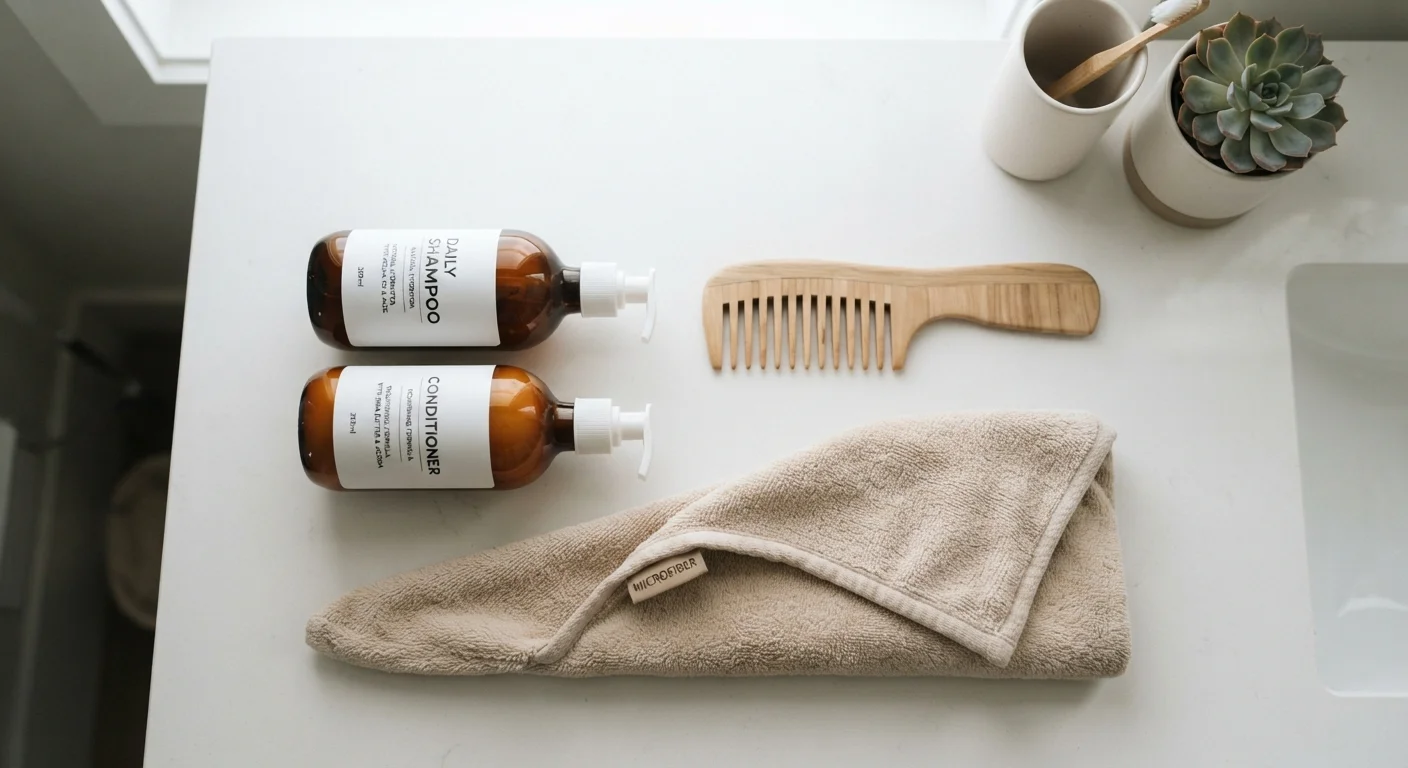
- Detangle before washing: Working through knots on dry hair is gentler than fighting tangles on wet, stretched strands. Use a wide-tooth comb or your fingers, starting from ends and working upward.
- Blot, don't rub: Rough towel drying creates friction along the cuticle layer. A microfiber towel or an old cotton T-shirt pressed gently against hair dramatically reduces frizz and breakage.
- Use heat with intention: When blow-drying, a nozzle attachment focused airflow down the hair shaft rather than across it, and keeping the dryer moving prevents concentrated heat damage.
These aren't complicated adjustments - but the small daily habits that cause breakage tend to accumulate quietly before the damage becomes visible.
Building a Routine That Actually Sticks
Consistency beats complexity. A three-step routine done reliably twice a week will produce better long-term results than an elaborate ten-step process attempted sporadically. The goal is a baseline that fits your real schedule - not an idealized version of it.
Start by identifying your non-negotiables: wash frequency that matches your scalp, a conditioner suited to your ends, and a detangling method you'll actually use. Everything else - treatments, serums, scalp tonics - can layer in gradually once the foundation is stable. For context on how internal health intersects with what you see externally, diet and nutritional deficiencies can show up in hair in ways that no routine alone can address.
Track results over four to six weeks rather than four to six days. Hair responds slowly to routine changes - patience is part of the practice. See the broader haircare hub for related guidance, and building healthy daily habits for the psychology of sustaining any new routine.
This article is for general informational purposes only and does not constitute medical or dermatological advice. If you are experiencing significant hair loss, scalp conditions, or other concerns, consult a qualified healthcare professional.
The content on this site is for informational purposes only and is not a substitute for professional advice. Always consult a qualified professional for guidance specific to your situation.