

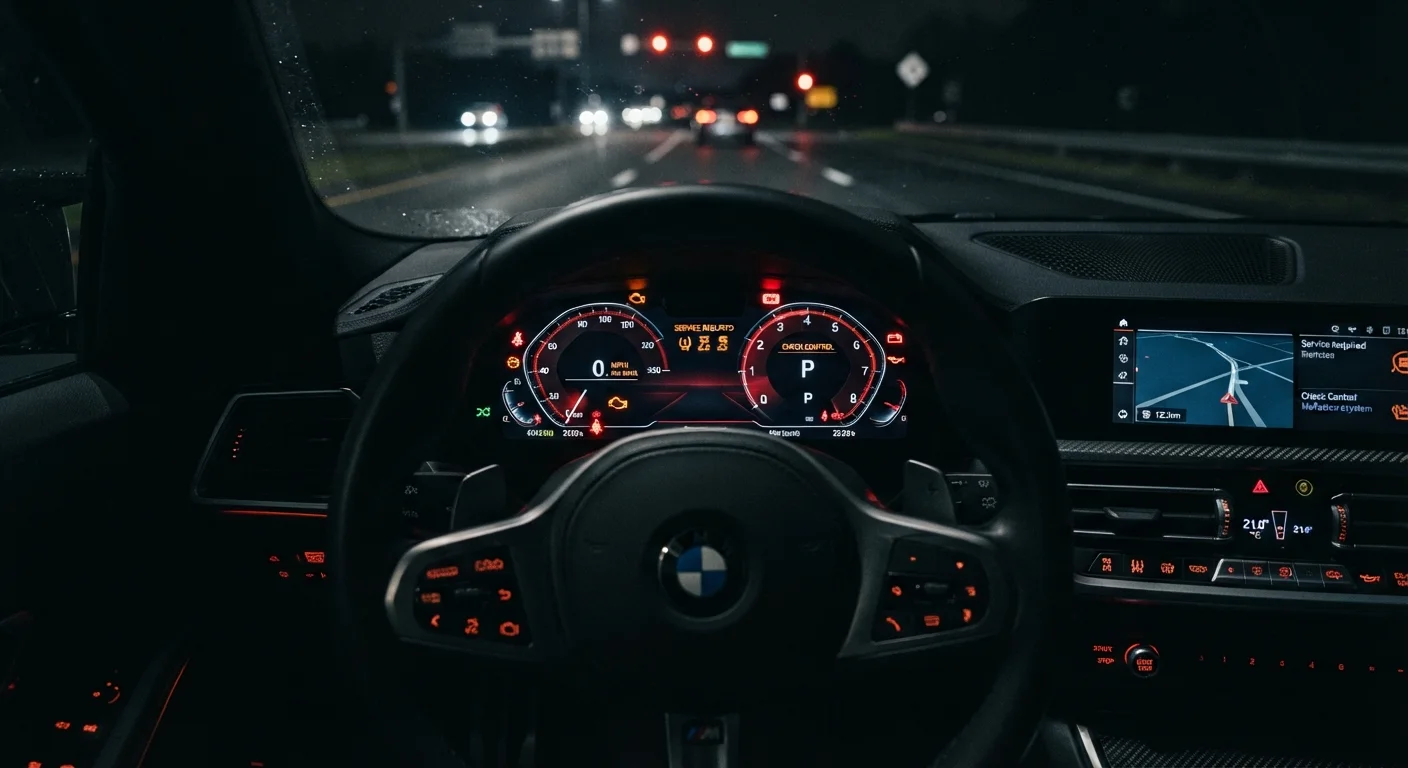
How Dashboard Warning Lights Work
Modern vehicles use an OBD system to continuously monitor dozens of sensors. When something falls outside normal operating parameters, the system triggers a warning light on the instrument cluster. Lights are color-coded by urgency: red signals an immediate threat requiring you to stop safely as soon as possible; yellow or amber indicates a condition that needs attention soon but isn't yet critical; green or blue lights are informational, confirming an active feature like high beams or cruise control.
Understanding this color hierarchy is the fastest way to make a sound decision in the moment — before you've even identified which specific light is on. See our pre-trip safety walkthrough for a broader check routine that catches problems before they reach your dashboard.
| Red light response | Stop safely as soon as possible |
| Amber light response | Schedule service within days |
| Check engine (flashing) | Reduce load, seek service immediately |
| TPMS trigger threshold | 25% below recommended tire pressure (U.S. NHTSA TPMS standard) |
| Best reference for unfamiliar icons | Your vehicle's owner's manual |
Red Lights: Stop and Act Immediately
Red warning lights demand the most urgent response. Continuing to drive with certain red lights active can cause severe engine or transmission damage — or create a safety hazard.
- Engine Temperature (thermometer icon): Coolant temperature has reached a dangerous level. Pull over safely, turn off the engine, and do not open the radiator cap while hot. Have the vehicle inspected before driving further.
- Oil Pressure (oil can icon): Oil pressure has dropped critically low. This is one of the most serious warnings — driving even a short distance can cause irreversible engine damage. Stop the engine promptly.
- Battery / Charging System (battery icon): The vehicle is no longer charging properly. Electrical systems will begin to fail. Drive directly to a service location if nearby, or pull over and call for assistance.
- Brake System (exclamation mark in circle): Can indicate low brake fluid, a brake circuit failure, or that the parking brake is applied. If the parking brake is off and the light stays on, have brakes inspected immediately.
- Power Steering (steering wheel with exclamation): Loss of power steering assist makes the vehicle significantly harder to steer. Slow down and drive cautiously to a safe stop.
See key engine bay components to understand what the oil and cooling systems actually look like under the hood.
OBD (On-Board Diagnostics)
A standardized system built into all modern vehicles that monitors engine and emissions components using electronic sensors. When a fault is detected, it stores a diagnostic trouble code and triggers a dashboard warning light.
Malfunction Indicator Lamp (MIL)
The technical name for the check engine light. It illuminates when the engine management system detects a fault that could affect emissions or drivability.
TPMS
Tire Pressure Monitoring System. A sensor-based system required on all US passenger vehicles sold after 2008 that alerts the driver when tire pressure drops to an unsafe level.
SRS (Supplemental Restraint System)
The collective term for airbags and seatbelt pretensioners. The SRS warning light indicates a fault in the system that could prevent proper deployment during a collision.
ABS (Anti-Lock Braking System)
A safety system that prevents wheels from locking up under heavy braking, allowing the driver to maintain steering control. An ABS fault does not disable standard braking but may reduce safety in emergency stops.
Catalytic Converter
An exhaust system component that reduces harmful emissions. A misfiring engine can force unburnt fuel into the catalytic converter, causing overheating and potentially destroying it.
Amber Lights: Schedule Attention Soon
Amber or yellow lights indicate a condition that should be addressed within days or at your next service appointment — but rarely require you to stop immediately.
- Check Engine (engine outline icon): The engine management system has detected a fault. This could range from a loose gas cap to a misfiring cylinder. A steady light means schedule a diagnostic scan soon; a flashing check engine light signals an active misfire that can damage the catalytic converter — reduce speed and load and seek service promptly.
- Tire Pressure Monitoring System — TPMS (flat tire icon): One or more tires are significantly under- or over-inflated. Check pressures when possible, as correct inflation affects both safety and fuel economy.
- Transmission Temperature (thermometer with gear): Transmission fluid is overheating. Reduce load — if towing, pull over and let the transmission cool.
- Low Fuel (fuel pump icon): Reserve fuel only. The driving range shown on your display is an estimate; conditions vary.
- Service Due / Maintenance Reminder (wrench icon): The vehicle has reached a mileage or time interval for scheduled maintenance. Review your car's maintenance schedule to understand what service is due.
A Diagnostic Scan Gives You Answers
When the check engine light comes on, an OBD-II scanner reads the stored fault code and points to the system involved. Many auto parts retailers offer free code reading as a public service. This doesn't replace a mechanic's diagnosis, but it tells you whether the fault is minor (e.g., emissions sensor) or warrants urgency before you drive further.
Safety System and Informational Lights
Blue, green, and white lights are generally informational. However, some amber safety-system lights warrant attention.
- ABS (ABS in circle): The anti-lock braking system has a fault. Standard braking still works, but ABS — which helps prevent wheel lock-up under hard braking — may not engage correctly. Schedule an inspection.
- Airbag / SRS (seated figure with circle): The supplemental restraint system has a fault. Airbags may not deploy in a collision, or could deploy unexpectedly. Seek service promptly.
- Traction Control / Stability Control (car with wavy lines): If flashing, the system is actively working. If illuminated steadily, the system may be off or faulted — check whether you've manually disabled it and, if not, have it inspected.
- High Beam Indicator (blue horizontal lines): Confirms high beams are active. For guidance on using headlights effectively, see our article on night driving and headlights.
When in doubt about any unfamiliar symbol, consult your owner's manual — every vehicle includes a dedicated warning light reference section that covers model-specific icons not listed here.
The content on this site is for informational purposes only and is not a substitute for professional advice. Always consult a qualified professional for guidance specific to your situation.