

Summary
18 items · 5–10 minutes
Why a Pre-Trip Check Is Worth the Time
Most vehicle problems don't appear without warning — they show early signs that are easy to spot if you know where to look. A flat-in-progress tire, a low fluid reservoir, or a burned-out brake light are all detectable in minutes before you ever leave your driveway. The trouble is that familiarity breeds complacency: drivers who know their vehicle well often assume everything is fine.
This checklist is designed for everyday driving, not just long road trips. The items below take between five and ten minutes combined and cover the areas most likely to cause a safety issue or a breakdown. For extended travel, pair this with a fuller pre-departure planning checklist that covers documents, route planning, and emergency prep.
Understanding what you're looking at also matters. If you spot an unfamiliar symbol lit on your dash, learn what each warning light means before dismissing it. Some signals indicate conditions that make it unsafe to drive at all.
Don't Skip This Step in Cold Weather
Cold temperatures can drop tire pressure by roughly 1 PSI for every 10°F decrease, meaning tires that were correctly inflated on a warm afternoon may be noticeably underinflated the next cold morning. Ice and snow can also obscure damage or debris lodged in a tire. Always factor in overnight temperature drops when assessing tire condition in winter months.
What to Check and How to Do It
Work through the checklist groups below in order — exterior first, then cabin, then a quick systems check with the engine running. The goal is a methodical habit, not a rushed scan.
Exterior Walk-Around
Under the Hood
Cabin and Controls
Emergency Readiness
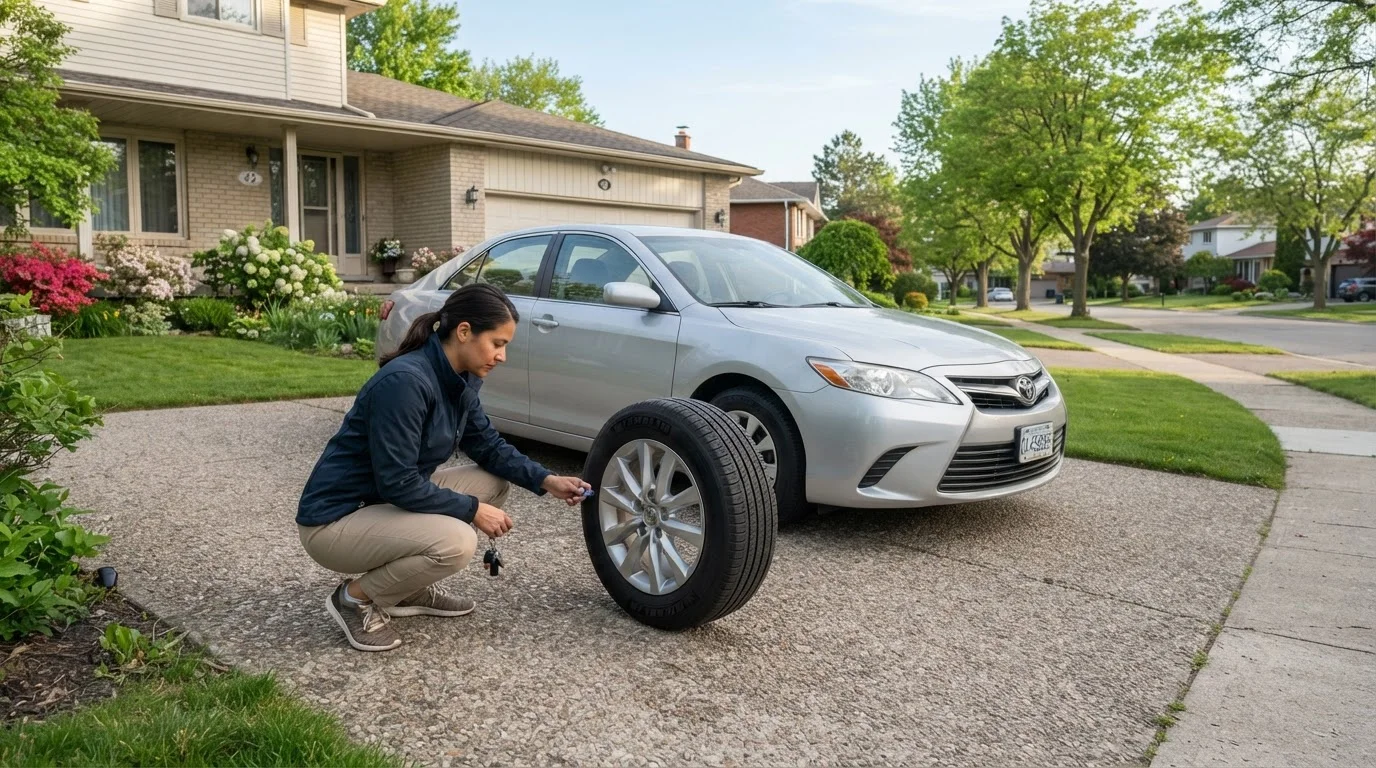
Tire health deserves particular attention. An underinflated tire handles poorly, wears unevenly, and is more vulnerable to a sudden failure at highway speeds. If you want to understand what that failure looks and feels like, read about tire blowouts on the highway — the correct response is counterintuitive and worth knowing in advance.
Mirror and blind-spot verification is another step that drivers frequently skip. Mirrors shift position over time, and a setting that was correct last week may not be correct today. Blind spots are more dangerous than most drivers realize, particularly when changing lanes or reversing out of a driveway.
Never Drive With a Lit Warning Light You Don't Recognize
Some dashboard warnings — particularly those related to brake pressure, oil, or engine temperature — indicate conditions that can lead to sudden mechanical failure or loss of vehicle control. If a warning light appears and you are unsure what it means, pull over safely, consult your owner's manual or a trusted reference, and do not continue driving until you understand the cause. Modern safety assist systems may also be disabled or degraded when a fault is detected, meaning features you rely on may not operate as expected.
For context on what this checklist doesn't cover — deeper, schedule-based maintenance — see the seasonal car maintenance checklist, which addresses items like brake pad wear, belt condition, and battery health that require periodic professional attention.
If something does go wrong after you've pulled out, knowing what to do matters as much as prevention. A step-by-step breakdown response guide can help you stay calm and safe if your vehicle stops moving unexpectedly.
Tire Pressure Gauge
Provides an accurate PSI reading so you can confirm tires are inflated to the manufacturer's recommended level, found in the door jamb or owner's manual.
Dipstick and Clean Rag
Used to check engine oil level and assess its condition — essential for catching low or degraded oil before it causes engine damage.
Reflective Warning Triangle or Flares
Alerts other drivers if you need to stop unexpectedly — a key safety item for any roadside emergency.
Portable Flashlight or Headlamp
Makes it possible to inspect tires, the engine bay, or the underside of the vehicle in low-light conditions.
First-Aid Kit
Provides basic medical supplies for minor injuries sustained during a roadside stop or minor accident.
The content on this site is for informational purposes only and is not a substitute for professional advice. Always consult a qualified professional for guidance specific to your situation.