

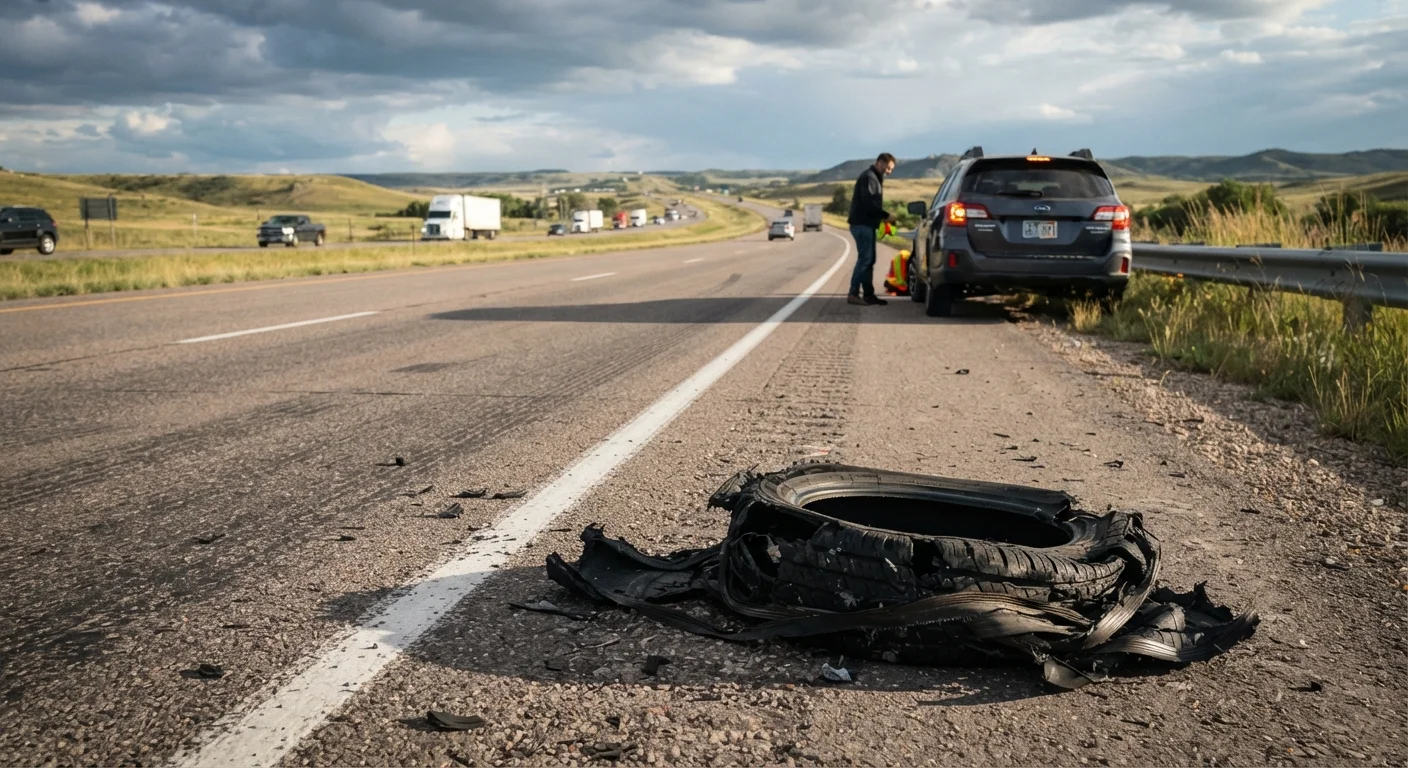
What Actually Happens During a Blowout
A highway blowout unfolds in a fraction of a second. The tire — most often already weakened by underinflation, overloading, or a prior impact — reaches a failure point under heat and stress. The sidewall or tread separates, air escapes explosively, and the structural integrity of the tire collapses.
What you feel is immediate and dramatic: a loud bang, a hard pull toward the affected corner of the vehicle, vibration through the steering wheel, and a rapid deceleration on the side of the failed tire. The car wants to veer — sometimes sharply — in the direction of the blowout.
The instinct most drivers have in that moment is to brake hard and steer away from the pull. Both responses make the situation worse. Hard braking shifts weight forward abruptly and can cause the vehicle to spin. Overcorrecting the steering creates its own loss of control. The physics of a blowout demand a counterintuitive response.
Front vs. Rear Blowout: Different Feel, Same Principles
A front blowout affects steering directly and feels more violent at the wheel. A rear blowout causes the back of the vehicle to swing or fishtail. In both cases, the correct response is the same: hold the wheel firmly, avoid sudden braking, and let the vehicle decelerate before steering off the road. Do not overcorrect in either direction.
The Correct Response, Step by Step
Your goal is to stabilize the vehicle first, slow it second, and exit the road third — in that order.
- Grip and hold. Both hands on the wheel. Resist the pull rather than overcorrecting. Keep the vehicle pointed straight.
- Do not brake. In the first few seconds, braking destabilizes the car further. Let engine resistance and road friction do the work.
- Briefly ease into the throttle. A short, gentle application of acceleration counteracts the drag of the blown tire and helps you maintain directional control. This feels wrong — do it anyway.
- Let the car slow naturally. As speed drops below roughly 30 mph, the vehicle becomes much easier to manage.
- Signal and move to the shoulder gradually. Use smooth, deliberate steering inputs. Avoid sharp turns at any remaining speed.
- Get completely off the travel lanes. Pull as far onto the shoulder as possible, ideally beyond any road markings.
Once stopped, follow the same hazard protocols as any roadside breakdown. Turn on your hazard lights immediately, stay inside the vehicle if traffic is close, and call for assistance. For a detailed sequence, see our guide on highway breakdown safety.
Practice the Response Before You Need It
You won't have time to think through the steps during an actual blowout. Mentally rehearse the sequence — grip, hold, don't brake, ease into throttle, slow gradually, move to shoulder — so it becomes instinctive. Some driver training programs offer skid pad or emergency response exercises that can help build these reflexes in a controlled environment.
Why Blowouts Happen — and How to Reduce the Risk
Understanding the causes helps you avoid being in that situation in the first place. Three factors account for the vast majority of highway blowouts:
- Underinflation. A tire running below its recommended pressure flexes more with each rotation, generating heat. Over time, that heat breaks down the internal structure. This is the single most preventable cause.
- Overloading. Every vehicle has a load rating. Exceeding it puts excessive stress on tires, particularly in hot weather or on long drives.
- Existing damage. Sidewall cuts, road hazard impacts, and severely worn tread leave tires vulnerable to sudden failure under stress.
The practical fix for all three is routine maintenance. Check tire pressure monthly — not just visually, but with an accurate gauge — and always before a long road trip. Our explainer on tire pressure and tread depth walks through what the numbers actually mean and how to read them correctly.
A quick pre-trip vehicle walkthrough is also worth building into your routine. The pre-trip safety checklist covers what to look at before you leave the driveway.
~75%
Of blowouts linked to underinflation
The U.S. National Highway Traffic Safety Administration has long identified chronic underinflation as the leading contributing factor in tire failure incidents.
11,000+
Annual tire-related crashes in the US
NHTSA data estimates that tire-related failures contribute to thousands of crashes each year on American roads, many of which are preventable.
After the Blowout: What Comes Next
Once you're safely stopped and hazards are on, assess the situation calmly. Do not attempt to change a tire in an active travel lane or on a narrow shoulder with fast-moving traffic — wait until conditions are safe or assistance arrives.
Inspect the damaged tire carefully. A blowout often destroys the tire completely, but also check the rim for damage and the wheel well for any debris lodged in the suspension components. If there's any doubt about the vehicle's roadworthiness, don't drive it — call for a tow.
For a full step-by-step response once your car is stopped, this roadside breakdown guide is a practical resource. If you want to understand how a blowout fits alongside other emergency driving scenarios, this overview of tire blowouts, brake failures, and skids is worth reading before your next long trip.
Frequently Asked Questions
Keep a firm grip on the steering wheel, resist braking, and gently accelerate slightly to stabilize the car. Steer straight, let the vehicle slow on its own, then gradually guide it to the shoulder.
When a tire loses pressure suddenly, one side of the axle loses support while the other maintains traction. This imbalance creates a strong lateral pull toward the blown tire.
No. Driving on a blown tire, even briefly, can damage the wheel rim and suspension components. Pull over as soon as it is safe to do so.
Check your tire pressure monthly and before long trips. Also inspect tread depth and look for visible cracking, bulges, or embedded objects. See a qualified technician if anything looks unusual.
Front blowouts are generally more difficult to manage because they directly affect steering. Rear blowouts cause the back of the car to fishtail but are usually easier to control with proper technique.
The most common causes are chronic underinflation, overloading the vehicle beyond its rated capacity, and pre-existing tire damage such as sidewall cuts or worn tread. Heat buildup at high speeds accelerates failure.
The content on this site is for informational purposes only and is not a substitute for professional advice. Always consult a qualified professional for guidance specific to your situation.