

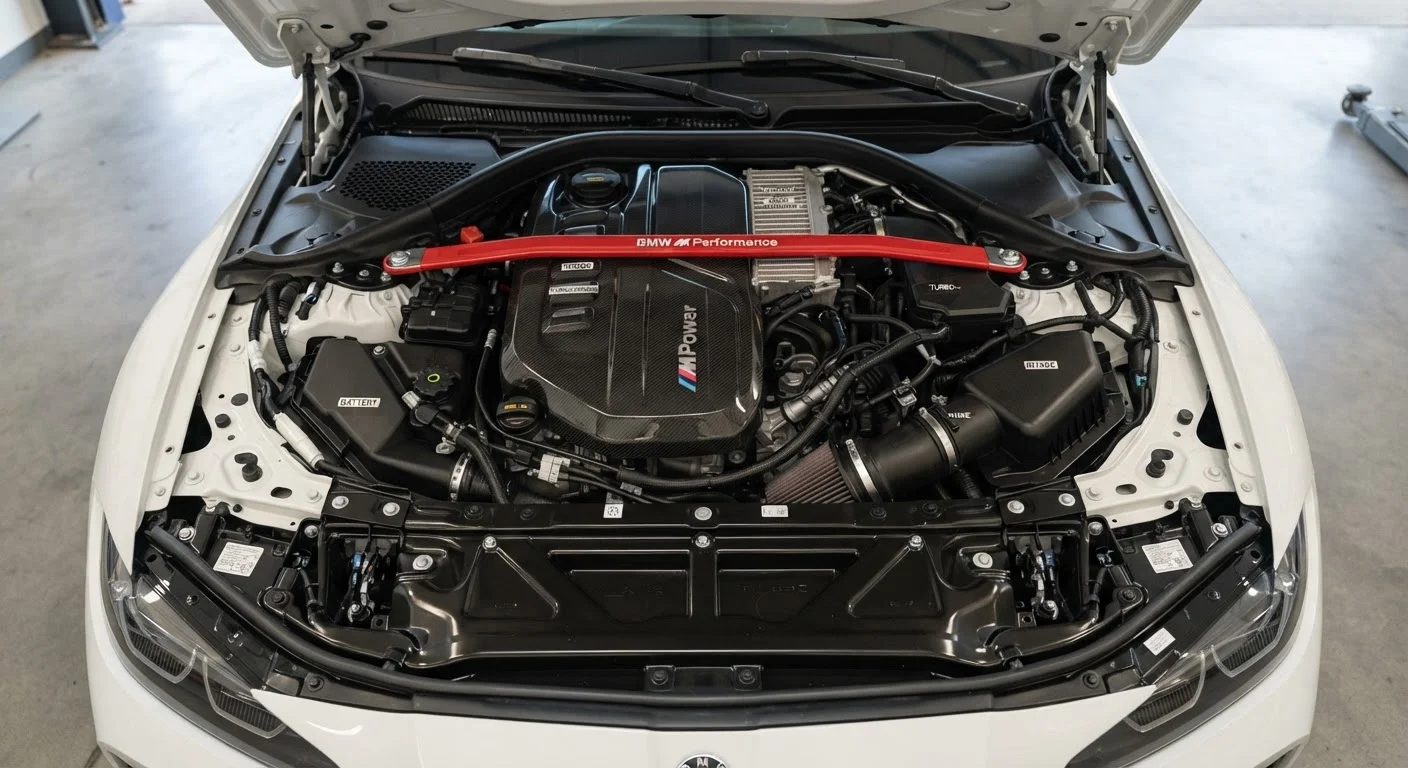
Why Engine Bay Literacy Matters
Most drivers will open their hood at some point — whether for a routine check, a roadside emergency, or a pre-purchase inspection. Yet the engine bay can feel like foreign territory: a tangle of hoses, caps, and wiring with no obvious starting point.
You don't need to be a mechanic to benefit from understanding what's in front of you. Recognising ten key components gives you the ability to spot obvious problems early, communicate clearly with a shop, and make more confident decisions about your vehicle. Think of this as a visual reference you can return to any time you open the bonnet.
If warning lights are already on your mind, our companion piece dashboard warning light guide ties what you see on the dash back to what's happening under the hood.
The Ten Components Worth Knowing
1. Engine Oil Dipstick
Usually marked with a brightly coloured ring, the dipstick lets you check oil level and quality without any tools. Pull it out, wipe it clean, reinsert fully, then withdraw again to read the level against the MIN/MAX markers. Dark, gritty oil signals it's time for a change.
2. Engine Oil Filler Cap
Sitting on top of the engine, this is where oil is added. It's typically marked with an oil-can symbol. Never open it on a hot engine.
3. Coolant (Antifreeze) Reservoir
A translucent plastic tank connected to the radiator, with clearly marked MIN and MAX lines. Check the level visually — no cap removal needed when the engine is cold. Low coolant is a red flag that should be investigated rather than simply topped up repeatedly.
4. Radiator
Positioned at the front of the engine bay, the radiator dissipates heat from the coolant. The cap on top of the radiator is under significant pressure when hot — never open it on a warm engine.
5. Battery
A rectangular box, often black or dark grey, usually located near one of the front corners of the engine bay. Check for white or bluish corrosion around the terminals — a sign of age or a poor connection. Batteries typically last three to five years.
6. Brake Fluid Reservoir
A small, often translucent container mounted near the firewall (the wall separating the engine from the cabin) on the driver's side. Brake fluid level drops slightly as brake pads wear. A sudden drop, however, can indicate a leak and warrants immediate professional attention.
7. Power Steering Fluid Reservoir
Found near the front of the engine (on vehicles with hydraulic power steering), this reservoir keeps the steering system responsive. Many modern vehicles use electric power steering and won't have this component at all.
8. Windshield Washer Fluid Reservoir
The one component you can safely top up at home with no mechanical knowledge. It's usually a large blue-capped container. Use purpose-made washer fluid rather than plain water, especially in freezing climates.
9. Air Filter Housing
A large plastic box connected to a duct leading to the engine intake. Inside sits the air filter, which prevents dust and debris from entering the engine. A dirty filter can reduce efficiency and is generally straightforward for a mechanic — or a confident DIYer — to inspect.
10. Serpentine Belt
A flat, ribbed rubber belt looping around several pulleys at the front of the engine. Cracks, fraying, or glazing are warning signs. A broken serpentine belt can leave you without power steering, charging, or air conditioning — and may cause engine damage — so flag any deterioration to a mechanic promptly.
For a fuller picture of when each of these systems needs attention, see our car maintenance schedule guide.
Knowing When to Call a Professional
Visual checks are valuable, but knowing when to stop and seek help is equally important. If you notice any of the following, don't attempt repairs without proper training: coolant that is milky or oily (may indicate a head gasket issue), brake fluid that has dropped significantly, wiring that appears melted or chewed, or any fluid leak that creates pooling under the vehicle.
Our DIY vs. mechanic breakdown covers which tasks most drivers can safely handle at home and which genuinely require a qualified technician. And if you're building good habits from scratch, Vehicle Maintenance from the Very Beginning is an ideal companion to this reference.
Regular checks take fewer than five minutes and can prevent repairs that cost hundreds of dollars — and keep you safer on the road. The seasonal maintenance checklist offers a structured way to build that habit across the year.
The content on this site is for informational purposes only and is not a substitute for professional advice. Always consult a qualified professional for guidance specific to your situation.