

Our Verdict
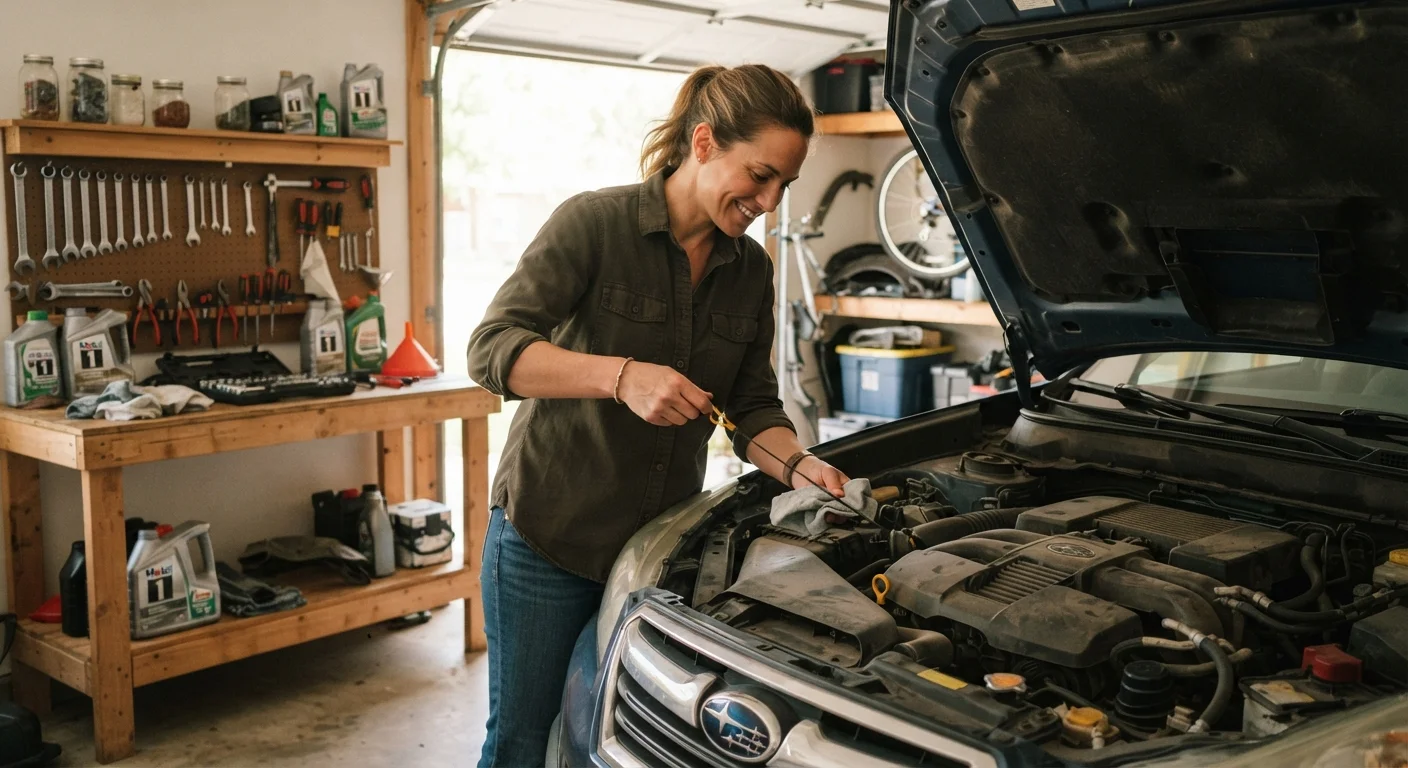
For most everyday drivers, the smartest strategy is a hybrid approach: handle straightforward, low-risk maintenance tasks at home to save money, and trust a qualified mechanic with anything involving safety-critical systems or specialized diagnostic equipment. Understanding where that line sits — and being honest about your own skill level — is the real skill worth developing.
| Best for | Recommended |
|---|---|
| Drivers comfortable with basic tools and routine upkeep | DIY Maintenance |
| Safety-critical repairs and complex diagnostics | Professional Mechanic |
| Most everyday drivers balancing cost and confidence | Hybrid approach (DIY + mechanic as needed) |
Why the DIY vs. Mechanic Question Matters
Vehicle ownership involves dozens of maintenance tasks each year. Knowing which ones you can responsibly handle yourself — and which genuinely require professional expertise — affects both your wallet and your safety. The answer isn't simply "do everything yourself to save money" or "always go to a shop." It depends on the task, your tools, your experience, and the consequences of getting it wrong.
For a grounding in what maintenance your car actually needs and when, see our guide to your car's maintenance schedule. That context makes the DIY-or-mechanic decision far easier to navigate.
| DIY Maintenance | Professional Mechanic | |
|---|---|---|
| Cost | Lower parts cost; no labor charge | Higher total cost; includes labor and shop fees |
| Safety risk | Low for simple tasks; higher for complex ones | Minimized when using a qualified, licensed mechanic |
| Tools required | Basic hand tools suffice for routine jobs | Specialized diagnostic and workshop equipment |
| Time investment | Variable; can be longer without experience | Usually faster due to expertise and equipment |
| Suitable for | Filters, fluids, wipers, tire pressure | Brakes, suspension, transmission, electrical faults |
| Error consequences | Low for simple jobs; serious for complex ones | Accountability through warranty on parts and labor |
Tasks Most Drivers Can Handle at Home
A meaningful set of routine maintenance tasks require only modest mechanical ability, basic tools, and the willingness to consult your owner's manual. These are generally low-stakes, well-documented jobs where an error is unlikely to cause immediate safety risk:
- Engine air filter replacement: Usually a clip or screw-fastened housing — accessible in minutes and detailed in every owner's manual.
- Wiper blade replacement: A straightforward swap requiring no tools in most vehicles.
- Cabin air filter: Often located behind the glove box; a ten-minute job on most modern cars.
- Fluid top-offs: Checking and topping up washer fluid, coolant (when cold), and power steering fluid are visual tasks any driver can learn. Our fluid checks guide walks through each one clearly.
- Tire pressure checks: A pressure gauge and the figure printed inside your door jamb are all you need.
- Battery terminal cleaning: Corrosion on terminals is manageable with safety gloves and a wire brush — though battery replacement itself warrants more caution on modern vehicles with memory-sensitive electronics.
Start with Your Owner's Manual
Before attempting any maintenance task, locate the relevant section in your owner's manual. It specifies the correct fluids, filter part numbers, torque settings, and service intervals for your exact vehicle. Relying on generic online guides without cross-referencing your manual is one of the most common — and avoidable — DIY mistakes.
Oil changes fall into a grey area. Mechanically they're straightforward, but they require proper disposal of used oil, an oil drain pan, jack stands, and knowledge of your vehicle's spec. For drivers new to maintenance, the fundamentals of vehicle maintenance article is a useful starting point before attempting even simple jobs.
When to Hand the Keys to a Professional
Certain repairs involve safety-critical systems, specialized tools, or diagnostic equipment that simply aren't accessible to the average home mechanic. Getting these wrong doesn't just risk further vehicle damage — it can put you and others on the road in danger.
- Brake system work: Pad replacement at the front may be feasible for experienced home mechanics, but calipers, brake lines, ABS components, and rear drum systems should be handled professionally. Brake failure has severe consequences.
- Suspension and steering: Worn shocks, ball joints, or tie rods require alignment equipment and precise torque settings. Incorrect work here affects handling stability at highway speeds.
- Transmission service: Complex fluid systems, clutch packs, and electronic controls mean transmission work almost always belongs in a shop.
- Electrical and software diagnostics: Modern vehicles rely heavily on interconnected control modules. Fault codes from an OBD-II reader are a starting point, not a full diagnosis. Misinterpreting sensor data and replacing unnecessary parts is a common and expensive mistake.
- Timing belt or chain service: Requires precise engine synchronization. Errors can cause serious internal engine damage.
Don't Let Cost Pressure Override Safety
Skipping professional service on safety-critical systems to save money is a false economy. A brake job performed incorrectly, or a suspension component installed without proper alignment, can cause accidents that far outweigh any cost saved. If a repair exceeds your current skill level, it's the right call to bring in a professional — not a sign of failure.
Once a professional has completed work, understanding the paperwork is its own skill. Our guide to reading a mechanic's service report helps you evaluate what was done and ask the right questions before approving future work.
Making the Call: A Practical Framework
Before deciding to DIY any repair, honestly answer three questions:
- What is the consequence of an error? If the answer involves reduced braking, steering instability, or engine damage, the risk profile favors a professional.
- Do I have the right tools? Many jobs require more than a basic socket set — torque wrenches, spring compressors, code readers, and specialty pullers are often non-negotiable.
- Is the procedure well-documented for my specific vehicle? Generic guidance has limits. Your owner's manual and vehicle-specific forums are more reliable than general tutorials.
The decision framework isn't unlike other home maintenance choices. For a useful parallel, this framework for DIY vs. hiring a contractor applies the same logic to home repair decisions and may sharpen your thinking.
Keep in mind that common maintenance myths can push drivers toward unnecessary DIY work or, conversely, unnecessary shop visits. Knowing what's actually required — rather than what's rumored — is half the battle. Your seasonal maintenance checklist is a reliable way to stay ahead of both.
The content on this site is for informational purposes only and is not a substitute for professional advice. Always consult a qualified professional for guidance specific to your situation.