

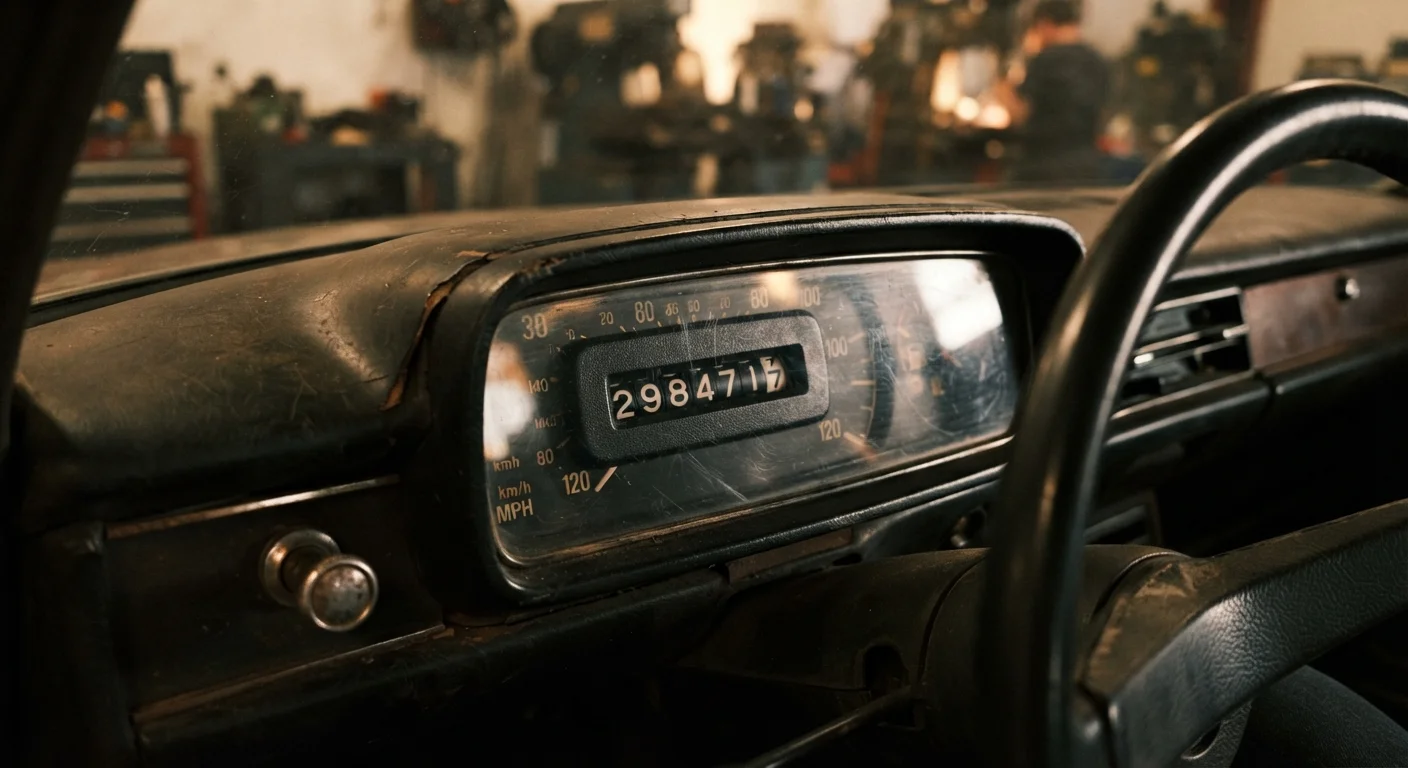
Why 100,000 km Is a Turning Point
For decades, 100,000 miles was treated as a vehicle death sentence in North America. Today, with engineering improvements across the industry, 100,000 kilometres is more of a milestone than a finish line — but it does mark a genuine shift in how a car should be maintained.
Up to that point, most modern vehicles run largely on schedule: oil changes, filter replacements, and tyre rotations follow manufacturer-recommended intervals without much deviation. After that threshold, cumulative wear starts to compound. Gaskets that have cycled through thousands of heat expansions begin to harden. Bearings that have rotated hundreds of millions of times develop play. Components that were designed to last the first 100,000 km don't automatically carry through the second.
This doesn't mean your car is about to fail — it means it needs a different kind of attention. If you're just getting started with vehicle ownership and want to understand the basics first, see our fundamentals guide for new owners.
200,000+ km
Realistic lifespan with consistent maintenance
Industry data and long-term vehicle studies suggest well-maintained cars routinely achieve 200,000 km or more before major drivetrain failure.
~20%
Fuel economy loss from neglected sensors
A faulty oxygen sensor can reduce fuel efficiency by up to 20%, according to the U.S. Department of Energy's vehicle maintenance guidance.
5–7 years
Typical timing belt age replacement threshold
Many manufacturers specify timing belt replacement by age — often 5 to 7 years — regardless of whether the mileage interval has been reached.
Fluids That Need More Frequent Attention
Engine oil is the most discussed fluid in any vehicle, but high-mileage engines have specific needs that differ from new ones. Worn piston rings and valve seals allow small amounts of combustion byproducts to contaminate oil faster. Many mechanics recommend shortening oil change intervals for vehicles past 100,000 km — particularly if the engine shows any signs of consumption or minor seepage.
Coolant is often overlooked. Over time, it loses its corrosion inhibitors, becoming acidic and attacking aluminium components inside the engine and radiator. A coolant flush — not just a top-up — should be on the radar for any high-mileage vehicle that hasn't had one recently.
Transmission fluid, brake fluid, and power steering fluid also degrade with heat cycling. Brake fluid is hygroscopic, meaning it absorbs moisture from the air over time, which lowers its boiling point and can affect pedal feel under hard braking. These are not set-and-forget fluids in an older, well-used car.
When servicing a high-mileage engine, ask your mechanic to check oil consumption between changes — not just its condition at the service interval. Even a litre consumed per 1,000 km signals internal wear that affects how aggressively you should shorten change intervals.
Oil consumption is an early indicator of piston ring or valve seal wear, and catching it early lets you manage the vehicle proactively rather than reactively.
Keep a simple mileage log noting every fluid change, filter, and inspection — even if it's just a notes app on your phone. When a new fault appears, that history is worth more than any diagnostic tool for narrowing down causes quickly.
Mechanics consistently report that documented service histories allow faster, more accurate diagnosis and reduce the risk of unnecessary parts replacement.
Rubber, Belts, and Seals: The Silent Degraders
Rubber doesn't just wear from use — it degrades from heat, ozone exposure, and simple age. This means a vehicle with 110,000 km that's ten years old may have more rubber-related risk than a three-year-old vehicle at the same mileage.
The timing belt (where fitted — many modern engines use a timing chain) is the most consequential rubber component in an engine. Most manufacturers specify replacement between 80,000 and 160,000 km, but the service manual's age interval (often 5–7 years) can apply before the distance threshold is reached. A snapped timing belt typically causes severe engine damage. If the service history doesn't confirm replacement, treat it as due.
Beyond the timing belt, inspect accessory drive belts, coolant hoses, vacuum lines, and CV boot condition. Cracked or brittle hoses can fail suddenly. Split CV boots accelerate joint wear by allowing grease to escape and contaminants to enter.
Don't Skip Timing Belt Replacement
If a timing belt fails at highway speed, the result is almost always catastrophic engine damage — bent valves, broken pistons, or a seized engine. This is not a repair to defer. If you don't have documented proof that the belt was replaced at the manufacturer's specified interval, treat it as due regardless of apparent condition. Have a qualified mechanic inspect and replace it as needed.
Suspension, Brakes, and Steering Components
Shock absorbers and struts are often described as lasting 80,000–100,000 km as a general guideline, though real-world longevity depends heavily on road conditions and driving style. Beyond that range, worn dampers allow increased body movement, reduce tyre contact with the road, and extend braking distances — a safety concern that's easy to underestimate because degradation is gradual.
Ball joints, tie rod ends, wheel bearings, and bushings all develop increased play over time. The signs are subtle at first: a vague steering feel, a clunk over bumps, or uneven tyre wear. These aren't cosmetic issues — they affect how predictably the vehicle responds in an emergency manoeuvre.
Brake pads and rotors remain wear items that need regular measurement, but high-mileage vehicles may also show caliper seizing, brake hose deterioration, or rear drum hardware stiffness. A qualified mechanic should inspect the full braking system, not just pad thickness, at every service after 100,000 km.
For a season-by-season framework that covers these checks, our seasonal maintenance checklist is a practical companion resource.
Electrical Systems and Sensors in Older Vehicles
Modern vehicles rely on dozens of sensors to manage fuel delivery, emissions, transmission behaviour, and safety systems. As connectors age, they can develop corrosion or intermittent contact, generating fault codes that don't point to a failed component — just a degraded connection.
The oxygen sensors and mass airflow sensor are common culprits in older vehicles, affecting fuel economy and emissions output noticeably when they drift out of specification. The battery and alternator also warrant attention: a battery past five or six years of age becomes an increasing risk, particularly in cold climates where cranking demand is highest.
Don't dismiss a check-engine light in a high-mileage car as background noise. While some codes are minor, others signal developing issues that worsen if ignored. A basic OBD-II scan — available at many auto parts retailers or through a mechanic — gives you the specific fault code to research or discuss with a professional.
OBD-II Codes Are a Starting Point, Not a Verdict
A fault code tells you which system or sensor is outside expected parameters — it doesn't automatically tell you which component needs replacing. For example, a code for a lean fuel mixture could point to a faulty sensor, a vacuum leak, or a fuel delivery problem. Use codes to guide diagnosis, not to jump straight to parts replacement. A professional assessment is recommended for any persistent or repeated fault code.
Building a Smarter Maintenance Routine
The most effective thing a high-mileage car owner can do is treat the vehicle's service record as a living document. Knowing what has and hasn't been done prevents both over-servicing and dangerous gaps. If you've acquired the vehicle without a complete history, err toward replacing time-and-mileage-sensitive items like timing belts, coolant, and spark plugs rather than assuming they were done.
Shortening service intervals slightly — oil, filters, and visual inspections — is a low-cost strategy that catches developing issues before they escalate. The difference between an oil change at 7,000 km versus 10,000 km is modest in cost, but the diagnostic value of more frequent professional eyes under the bonnet compounds over time.
For a broader look at habits that extend vehicle lifespan regardless of where the odometer sits, see our guide on maintenance habits that add years to a car's life. And if you're weighing which tasks to tackle yourself versus handing to a shop, the DIY vs. mechanic breakdown offers a balanced perspective on where the line usually falls.
High-mileage motoring isn't about managing decline — it's about managing the specific, knowable needs of a mature vehicle. Drivers who understand those needs consistently get more reliable, safer, and more economical service from cars long past the 100,000 km mark.
The content on this site is for informational purposes only and is not a substitute for professional advice. Always consult a qualified professional for guidance specific to your situation.