

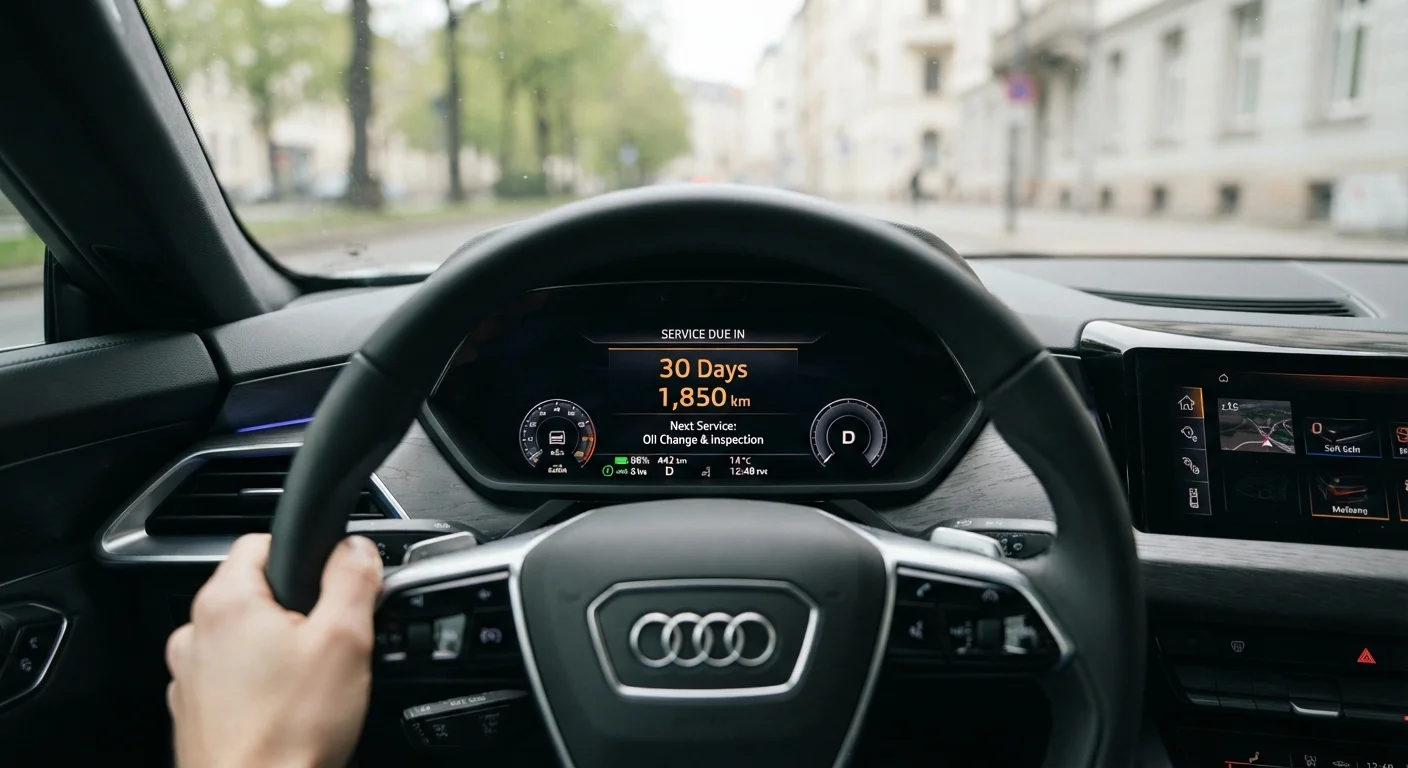
Option A
Scheduled Servicing
The predictable, calendar-driven approach.
Best for: Drivers who want clear, consistent reminders and straightforward service planning regardless of how they drive.
Option B
Condition-Based Maintenance
The adaptive, data-driven approach.
Best for: Drivers whose vehicles have onboard monitoring systems and whose driving patterns vary significantly over time.
How Each Approach Works
Vehicle maintenance falls broadly into two camps: doing it on a fixed schedule, or doing it when the vehicle's own data indicates it's necessary. Understanding the mechanics behind each helps drivers make better-informed decisions — or at least know what their car is already doing for them.
Scheduled servicing ties maintenance to predetermined thresholds — typically a mileage figure (such as every 5,000 or 7,500 miles) or a time interval (every six or twelve months), whichever comes first. These intervals are set by the vehicle manufacturer based on engineering standards and are published in the owner's manual. They don't change based on how the vehicle is driven. For a deeper look at what those intervals actually cover, see your car's maintenance schedule explained.
Condition-based maintenance (CBM), by contrast, relies on onboard sensors and algorithms to assess the actual state of key fluids and components in real time. The system continuously monitors factors like engine temperature cycles, oil viscosity degradation, driving load, and fuel quality. When the data indicates service is genuinely needed, a dashboard alert notifies the driver. This approach originated in European automotive engineering and has become more common in newer vehicles across multiple segments.
| Criterion | Scheduled Servicing | Condition-Based Maintenance |
|---|---|---|
| Interval basis | Fixed mileage or time | Real-time sensor data |
| Predictability | High — dates/mileage known in advance | Variable — alerts triggered by driving data |
| Vehicle requirement | Any vehicle with an owner's manual | Requires factory onboard monitoring system |
| Adapts to driving style | No | Yes |
| Risk of over-servicing | Moderate (conservative by design) | Lower under typical conditions |
| Risk of under-servicing | Lower if schedule is followed | Possible if sensors malfunction |
| Technician familiarity | Universal | Varies by manufacturer system |
Trade-Offs Worth Knowing
Scheduled servicing is transparent and easy to follow — you always know when the next visit is due, and any qualified technician can work to that standard. It's also conservative by design, which offers a margin of safety. The downside is that it doesn't adjust for real-world variation: a driver who takes only short local trips puts more stress on their engine oil than someone covering the same mileage on open highways, yet both would follow the same service interval.
Your Owner's Manual Is the Authority
Regardless of which maintenance approach your vehicle uses, the owner's manual is the definitive reference for service requirements. Manufacturer guidelines reflect the engineering tolerances of your specific engine and drivetrain. Following a different vehicle's schedule, or relying solely on generic online advice, can leave your vehicle under- or over-serviced. When in doubt, consult a qualified technician familiar with your make and model.
Condition-based maintenance addresses this variability directly, but it introduces its own considerations. The system is only as reliable as the sensors powering it, and if a sensor malfunctions or isn't maintained correctly, the alerts may be inaccurate. CBM systems also vary widely between manufacturers — what one automaker's system tracks may differ substantially from another's. Drivers should never assume a CBM-equipped vehicle requires zero attention between alerts; routine checks of tire pressure, brake wear, and fluid levels remain important regardless of system type. See our seasonal maintenance checklist for checks that apply across both approaches.
It's also worth noting that CBM systems are typically calibrated for the specific engine and drivetrain they're installed on. Using a CBM system's intervals as a guide for a different vehicle — or ignoring manufacturer guidance in favour of a third-party monitor — is not recommended. For a full picture of what service visits typically include, what routine servicing actually covers is a useful reference.
If you're new to vehicle ownership and navigating these concepts for the first time, vehicle maintenance from the very beginning provides a solid foundation. And for deciding which tasks to handle yourself versus leaving to a professional, see DIY maintenance vs. taking your car to a mechanic.
~40%
New US vehicles with oil life monitoring systems
Industry estimates suggest a significant and growing share of new vehicles sold in the US include some form of oil life or condition monitoring as standard equipment.
3,000–10,000 miles
Typical oil change interval range across approaches
Depending on vehicle age, oil type, and monitoring system, manufacturer-recommended oil change intervals can vary considerably — underlining why consulting your owner's manual matters.
The content on this site is for informational purposes only and is not a substitute for professional advice. Always consult a qualified professional for guidance specific to your situation.