

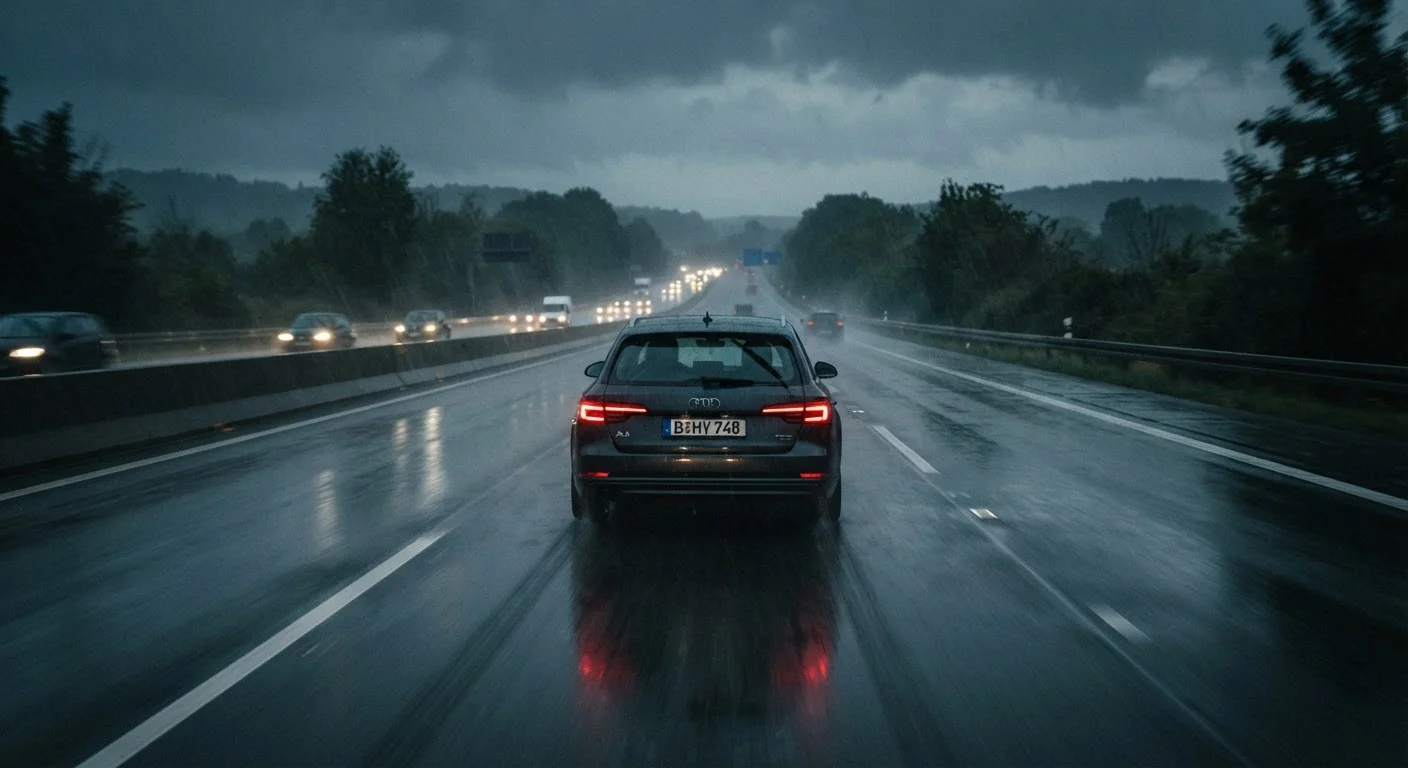
Why Adverse Weather Demands More Than Slowing Down
Most drivers know to slow down when it rains. Fewer understand how much to slow down — or that speed is only one variable among several that need to change simultaneously. Rain, fog, and snow alter the physics of driving in ways that require fundamentally different habits, not just a lighter foot on the accelerator.
According to the Federal Highway Administration, weather contributes to roughly 21% of all vehicle crashes in the United States annually. Yet the majority of those incidents happen in conditions that drivers routinely dismiss as manageable. The danger isn't always a blizzard — it's the light drizzle that makes oil rise to the surface of a warm road, or the thin morning fog that obscures a stopped vehicle just past a curve.
Understanding how each condition changes your vehicle's behavior — and how to respond before conditions deteriorate — is what separates reactive drivers from genuinely prepared ones. For a broader look at how weather shapes the driving experience on long trips, see our guide to driving in varied weather conditions.
21%
Of U.S. crashes linked to weather conditions
According to the Federal Highway Administration, weather is a contributing factor in approximately 1.2 million crashes each year in the United States.
2–10×
Increase in stopping distance on ice vs. dry pavement
The stopping distance of a passenger vehicle traveling at 30 mph can increase from roughly 75 feet on dry pavement to over 300 feet on packed snow or ice.
75%
Of weather-related crashes occur on wet pavement
Federal Highway Administration data shows that wet pavement — not snow or ice — accounts for the majority of weather-related crashes in the U.S. each year.
Rain: Traction, Aquaplaning, and the First Few Minutes
Rain creates layered hazards. The first few minutes of rainfall are statistically among the most dangerous, as water mixes with road-surface oils to create a slick film before runoff clears it. Tire tread channels water away from the contact patch, but that process breaks down above certain speeds — a phenomenon called aquaplaning (or hydroplaning), where the tire rides on a film of water rather than gripping the road surface.
Following distance should increase significantly in wet conditions. A common guideline used in driver education is the three-second rule in dry conditions, extended to at least five or six seconds in rain. This accounts for both longer braking distances and reduced reaction time caused by spray and reduced visibility.
Cruise control is worth switching off in wet conditions. If a tire loses traction briefly while cruise control is active, the system may respond by maintaining or increasing throttle — the opposite of what a driver would instinctively do.
Turn Off Cruise Control in Wet Conditions
Cruise control is designed for stable, dry highway driving. In rain, if a tire loses grip briefly, the system may apply throttle to maintain speed — exactly the wrong response. Disengage it at the first sign of rain or standing water and manage speed manually.
Fog: The Condition That Compresses Your World
Fog is uniquely disorienting because it creates a false sense of enclosed space. Drivers frequently feel like they are moving more slowly than they actually are, and the absence of reference points makes it harder to judge both speed and the gap to vehicles ahead.
The most important lighting rule in fog: use low-beam headlights, not high beams. High beams reflect off water droplets in the fog and scatter light back toward the driver, reducing visibility further. If your vehicle has dedicated rear fog lights, use them when visibility drops significantly — but switch them off when conditions improve, as they can dazzle drivers behind you.
Speed should be set so you can stop completely within your visible range. If you can see 200 feet ahead, you must be able to stop within 200 feet — which may mean traveling well below the posted limit. Speed limits represent the maximum for ideal conditions, not a floor for adverse ones.
“The most dangerous thing about fog is that it gives drivers a feeling of safety inside a cocoon of white — while the world beyond that cocoon can come to a sudden, lethal stop.”
— National Highway Traffic Safety Administration, U.S. federal road safety authority
Snow and Ice: Where Driver Confidence Becomes the Hazard
Snow and ice expose the gap between how capable drivers believe they are and how the physics of adhesion actually work. All-wheel drive (AWD) is often misunderstood here: it improves traction during acceleration but does not shorten stopping distances. A driver in an AWD vehicle traveling at highway speed on ice will take just as long to stop as a two-wheel-drive vehicle — sometimes longer if that false confidence led to a higher entry speed.
Black ice — a thin, transparent layer of ice on the road surface — is especially dangerous because it is nearly invisible. It forms most readily on bridges, overpasses, and shaded sections of road where surface temperatures drop faster than surrounding areas. If the road surface looks slightly wet but your vehicle suddenly feels unresponsive to steering inputs, you may be on black ice. Ease off the accelerator smoothly, avoid sudden steering corrections, and do not brake hard.
Winter tires — not to be confused with all-season tires — use rubber compounds that remain pliable below 45°F and tread patterns designed to bite into snow. For drivers in regularly cold climates, they represent a meaningful safety investment. For a practical perspective on vehicle emergency responses, understanding how to manage skids is a closely related skill.
Increase following distance to match road surface conditions, not just weather severity.
Braking distances increase dramatically on wet, snowy, or icy roads. A gap that would allow a safe stop in dry conditions may be dangerously inadequate when traction is reduced. Adjusting distance proactively — before you need to brake — is one of the most effective habits a driver can adopt.
Use the correct lights for the condition — and switch them off when conditions change.
Wrong light choices actively reduce safety: high beams in fog scatter light back at you; no lights in rain make you invisible to others; rear fog lights left on in clear conditions blind following drivers. Each condition has a specific best-practice lighting setup.
Brake earlier and more gently than you think necessary on slippery surfaces.
Hard, late braking on ice or wet surfaces causes wheels to lock (or ABS to engage repeatedly), extending stopping distance and reducing steering control. Gentle, progressive braking applied well ahead of a stop gives tires time to grip and transfer weight progressively.
Clear your entire vehicle of snow and ice before driving, not just the windshield.
Snow left on the roof slides onto the rear window when you brake, and onto following vehicles when you accelerate. In many U.S. states, driving with an unsecured load — including snow — is a traffic violation and a genuine hazard to others.
Know when to pull over — and treat that decision as a skill, not a defeat.
Some conditions — whiteout snow, dense fog with zero visibility, severe ice — exceed the safe operating envelope of most vehicles and most drivers. Recognizing that threshold and acting on it by finding a safe, well-lit pull-off is a sound judgment call.
Quick Adjustments You Can Make Before You Drive
Preparation before you turn the key matters as much as what you do behind the wheel. Many weather-related incidents are set in motion before the driver even reaches the road — by leaving without clearing all windows, skipping a quick check of tire pressure, or failing to top up washer fluid before a long drive in spray conditions.
Driver alertness is also a factor that compounds with poor weather. Fatigue degrades the fine motor control and split-second decision-making that adverse conditions demand. Driving while tired carries risks that rival impairment — combining fatigue with rain or snow dramatically narrows your safety margin.
AWD Is Not a Substitute for Winter Tires
All-wheel drive improves how a vehicle accelerates on slippery surfaces but does not reduce stopping distances. Braking performance is determined primarily by tire compound and tread design. In consistently cold or snowy climates, dedicated winter tires provide a meaningful safety advantage that drivetrain configuration cannot replicate. Consult a qualified tire professional for advice specific to your vehicle and driving environment.
The content on this site is for informational purposes only and is not a substitute for professional advice. Always consult a qualified professional for guidance specific to your situation.