

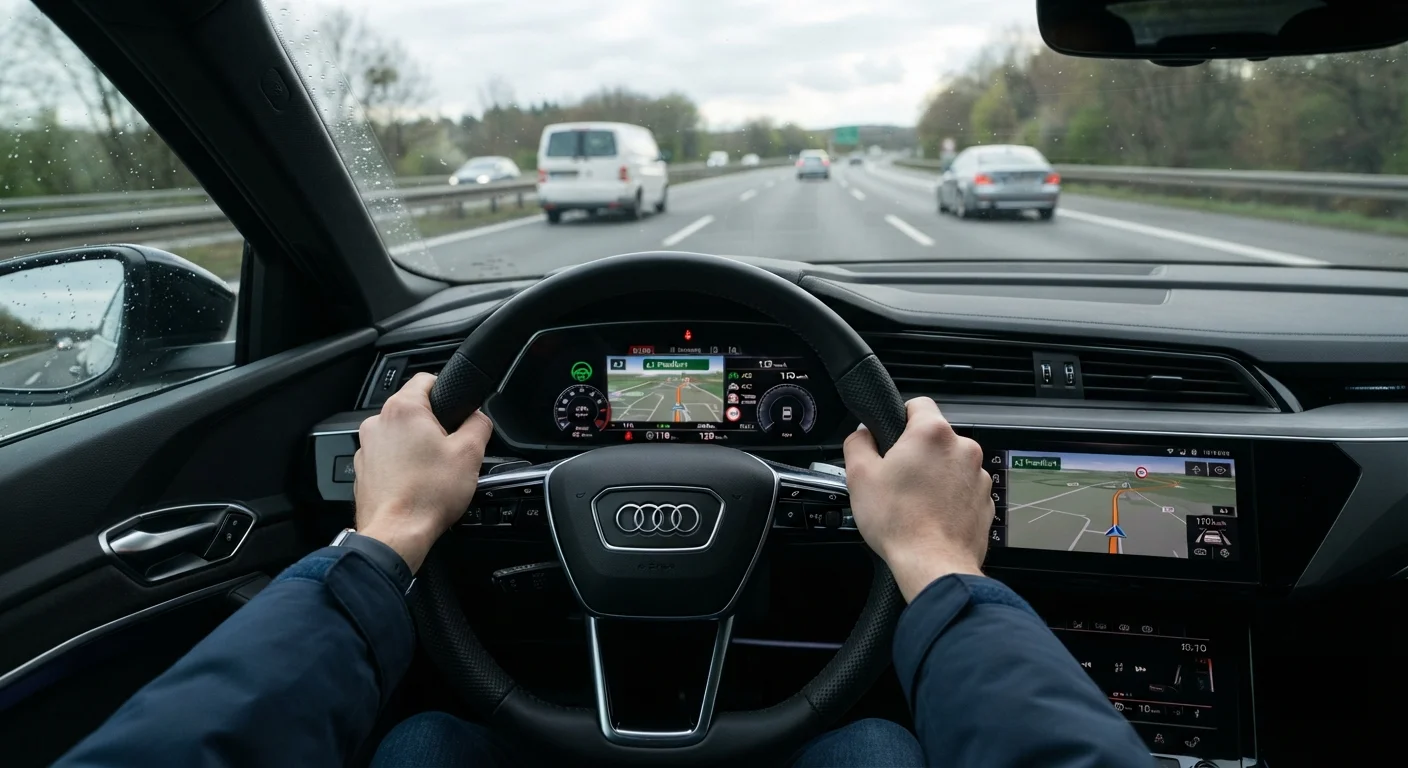
Why Safety Tech Creates Overconfidence
Modern driver-assistance systems represent a genuine leap in road safety engineering. Automatic emergency braking (AEB), lane-keeping assist, blind-spot monitoring, and adaptive cruise control have collectively prevented thousands of crashes. But these technologies carry an unintended side effect: they make driving feel easier than it actually is, encouraging a steady drift toward inattention.
The problem is not the technology itself — it is the gap between what drivers assume these systems do and what they are actually designed to do. Every system currently available on consumer vehicles in the US operates within a defined, limited scope. They are designed to assist an alert driver, not to act independently. When that distinction blurs, crashes happen.
~40%
Drivers who misunderstand their vehicle's automation level
Research published by the AAA Foundation for Traffic Safety has found that a significant share of drivers misidentify the capabilities of their vehicle's driver-assistance features.
3 seconds
Eyes-off-road time to significantly raise crash risk
The National Highway Traffic Safety Administration (NHTSA) research on distraction indicates that taking eyes off the road for even a few seconds substantially increases crash likelihood.
Understanding where the line falls — and why so many drivers routinely cross it — is the first step toward using these tools correctly. For a broader look at pre-drive preparedness, see our pre-trip safety walkthrough for a practical checklist before every journey.
The Most Dangerous Misconceptions — and How to Correct Them
The mistakes below are not rare edge cases. They reflect patterns documented by traffic safety researchers and reported by law enforcement following crashes where driver-assistance features were active. Each one involves a predictable cognitive error that safety tech inadvertently encourages.
Treating adaptive cruise control as a hands-free driving mode on the highway.
Why it happens: Adaptive cruise control smoothly manages speed and following distance, making it feel fully capable — especially on long, open stretches of interstate. Drivers gradually reduce their attention as the system handles the throttle and braking.
Assuming lane-keeping assist will steer the car through curves and lane changes.
Why it happens: The gentle corrective nudges from lane-keeping assist feel responsive enough that drivers assume the system is tracking the entire road geometry. Many drivers have accidentally drifted into adjacent lanes while relying on it.
Expecting automatic emergency braking (AEB) to stop the car in every collision scenario.
Why it happens: AEB demonstrations are impressive in controlled conditions, and marketing often emphasizes its capability. Drivers naturally begin to factor it into their following distances, mentally depending on it as a backup.
Not knowing which safety features are active or how to correctly operate them.
Why it happens: Modern vehicles can have a dozen or more driver-assist settings, often buried in menus or activated by unfamiliar stalk controls. Many drivers never read the relevant sections of their owner's manual and rely on assumptions.
Ignoring or dismissing driver attention warnings issued by the vehicle.
Why it happens: Driver monitoring alerts — such as steering wheel vibrations or warning chimes prompted by inattentive driving patterns — can feel annoying or overly cautious, leading some drivers to habitually dismiss or disable them.
You Are Always the Driver
No current production vehicle sold in the US is legally or technically classified as fully autonomous. Every driver-assistance feature — including adaptive cruise control, lane-keeping assist, and automatic emergency braking — requires a licensed, attentive human driver to remain in control. Misusing these systems as a substitute for active driving is a traffic safety violation and creates serious crash risk.
If you frequently drive unfamiliar highways or long interstate stretches, it is also worth understanding how lane discipline and merging dynamics interact with these systems. Our guide on lane discipline and safe merging covers scenarios where driver judgment cannot be delegated to technology.
Sensor Coverage Is Not 360-Degree Protection
Cameras and radar used by safety systems have physical blind spots and performance limits. Heavy rain, snow accumulation on sensors, low sun angles, and freshly repainted road markings can all degrade or disable these features without warning. Never assume your vehicle 'sees' everything you cannot. Always scan mirrors and check blind spots manually, regardless of which aids are active.
Similarly, digital navigation tools share an important parallel with driver-assist systems — both are capable aids that carry real failure modes. Our piece on when GPS and maps fail explores when to trust technology and when to override it — a mindset directly applicable to how you should engage with safety tech.
Staying informed about your vehicle more broadly supports safer decisions. The maintenance hub is a useful starting point for understanding how vehicle condition affects the reliability of onboard systems.
The content on this site is for informational purposes only and is not a substitute for professional advice. Always consult a qualified professional for guidance specific to your situation.