

Our Verdict
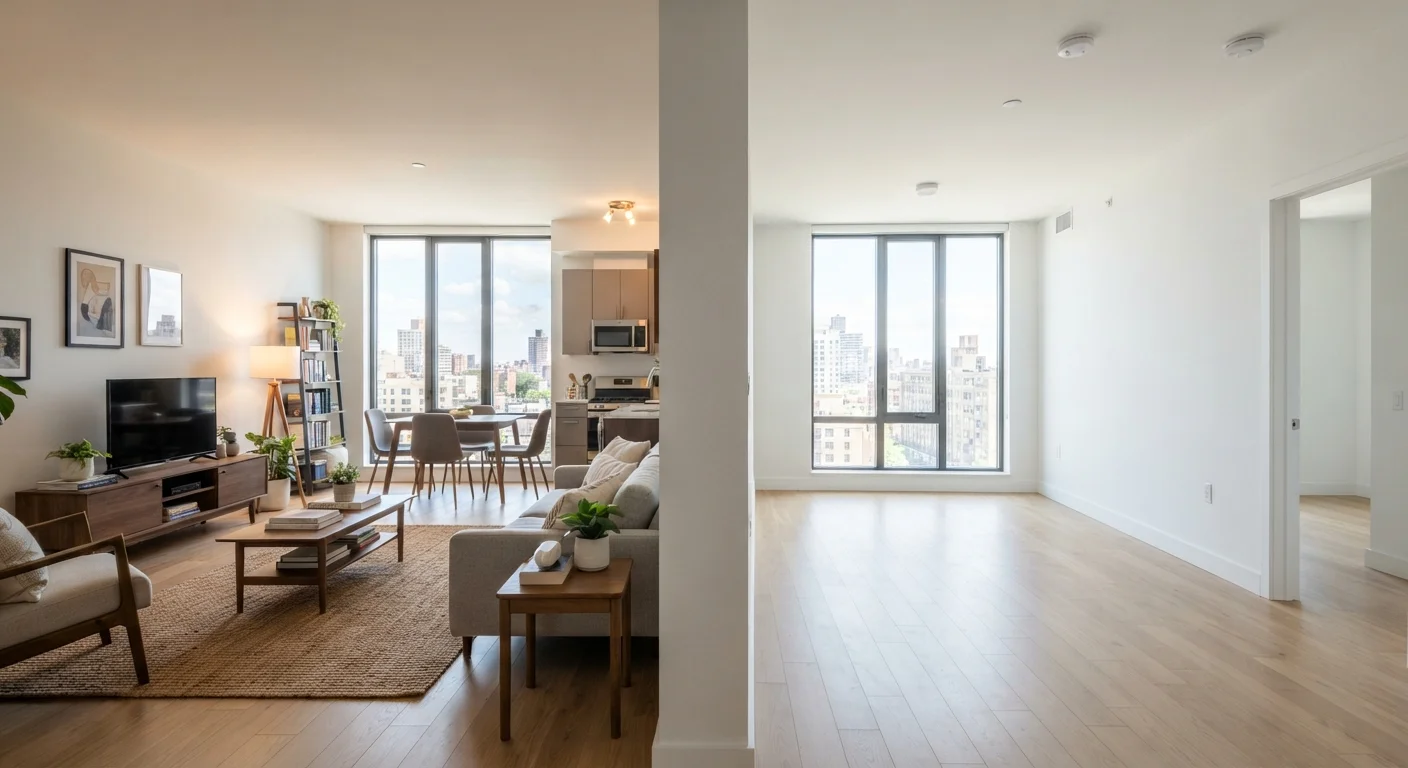
Neither furnished nor unfurnished rentals are universally more affordable — the better value depends heavily on how long you plan to stay and what you already own. Short-term renters and those relocating frequently tend to come out ahead with furnished units, while long-term tenants who want to personalize their space typically benefit from going unfurnished.
| Best for | Recommended |
|---|---|
| Short-term stays, relocations, or corporate housing needs | Furnished rentals |
| Long-term renters with existing furniture or personalization goals | Unfurnished rentals |
| Renters on tight upfront budgets who want lower monthly costs | Unfurnished rentals |
| Renters moving across the country or internationally | Furnished rentals |
What You're Actually Paying For
When a landlord lists a unit as furnished, that rent premium reflects more than a sofa and a bed frame. You're typically paying for the convenience of moving in immediately, the risk the landlord absorbs on furniture depreciation, and — in many cases — included utilities, Wi-Fi, or building services bundled into the monthly rate.
Unfurnished rentals strip all of that away and hand you a blank slate. The monthly rent is lower, but your upfront obligations expand considerably: furniture, appliances the landlord doesn't provide, and the logistics of getting everything there.
Understanding what's included on each side of the ledger is the first step toward an honest comparison. Ask any furnished landlord for an itemized list of what stays in the unit — and verify whether utilities or parking are folded into that quoted rent before doing any math.
| Furnished Rental | Unfurnished Rental | |
|---|---|---|
| Monthly rent | 15–30% higher on average | Lower baseline cost |
| Upfront furniture cost | None required | Potentially significant |
| Moving complexity | Lower — minimal belongings needed | Higher — furniture logistics required |
| Personalization | Limited by existing pieces | Full control over style and setup |
| Best lease length | Short-term (under 12 months) | Long-term (12+ months) |
| Utilities often included | More commonly bundled | Usually paid separately |
| Damage liability | Covers landlord's furniture too | Only your own belongings |
Running the Numbers: A Practical Framework
The most common mistake renters make is comparing only the monthly rent figures. A more useful approach is to calculate total cost over your expected lease term. Factoring in total cost of ownership — rather than sticker price alone — applies just as clearly to rental decisions as it does to purchases.
Here's a simple framework:
- Estimate furniture acquisition cost for the unfurnished unit. Outfitting a one-bedroom apartment with functional, durable pieces can range from a few thousand dollars to significantly more depending on your approach.
- Add moving costs. If you already own furniture, moving it cross-country can easily exceed what you'd spend renting furnished for several months.
- Calculate the monthly premium for the furnished unit and multiply it by your planned lease length.
- Compare totals. If the furnished premium over your lease is less than what you'd spend furnishing and moving, furnished wins on pure economics — and vice versa.
As price vs. value considerations remind us, the lower monthly number isn't always the smarter spend.
Factor In Your Move-Out Plan
Before committing to an unfurnished unit, think about what happens to your furniture when you leave. Selling, storing, or moving it all carries costs and effort. If you're likely to move again within two years, account for those exit costs when calculating whether buying furniture actually saves you money.
Lease Length Changes Everything
The furnished/unfurnished math shifts dramatically based on how long you stay. In general:
- Under 6 months: Furnished almost always wins. The rent premium rarely exceeds the cost of buying and then reselling or storing furniture on a tight timeline.
- 6 months to 1 year: It depends. Run the numbers for your specific market. In high-cost cities, furnished premiums can be steep enough that buying secondhand furniture and reselling it on departure breaks even.
- 1 year or more: Unfurnished typically becomes more economical. The monthly savings compound, and furniture you purchase becomes an asset you can move, sell, or keep.
Renters who move frequently — due to work, lifestyle, or personal circumstances — may find that furnished living simplifies their life enough to justify a recurring premium. Thinking through long-term housing decisions requires weighing both financial and lifestyle factors together.
15–30%
Typical furnished rent premium
Furnished apartments generally command a 15–30% monthly premium over comparable unfurnished units in the same market, though this varies significantly by city and unit type.
$3,000–$8,000+
Cost to furnish a one-bedroom apartment
Outfitting a one-bedroom with functional furniture — bed, sofa, dining set, and storage — typically falls in this range depending on quality level and sourcing approach.
Non-Financial Factors Worth Weighing
Cost isn't the only variable. Furnished units often come with landlord-chosen furniture that may not suit your taste or ergonomic needs. If you work from home and need a proper desk setup, or if you have accessibility requirements, a furnished unit's existing pieces may not serve you well.
Unfurnished rentals give you full control over your environment — a meaningful quality-of-life consideration for longer stays. If making a space feel like home matters to you, explore the décor ideas and inspiration that can help transform a blank apartment into a personalized living space.
There are also practical risk considerations: furnished units mean you're responsible for landlord-owned property. Damage to furniture can result in deductions from your security deposit. Review the lease carefully to understand who bears responsibility for normal wear versus accidental damage.
Read the Furnished Lease Carefully
Furnished leases often include an inventory list of all landlord-owned items and their condition at move-in. Document everything with photos on your first day. Failing to do so can leave you liable for pre-existing damage when you move out — a costly and avoidable dispute.
The content on this site is for informational purposes only and is not a substitute for professional advice. Always consult a qualified professional for guidance specific to your situation.