

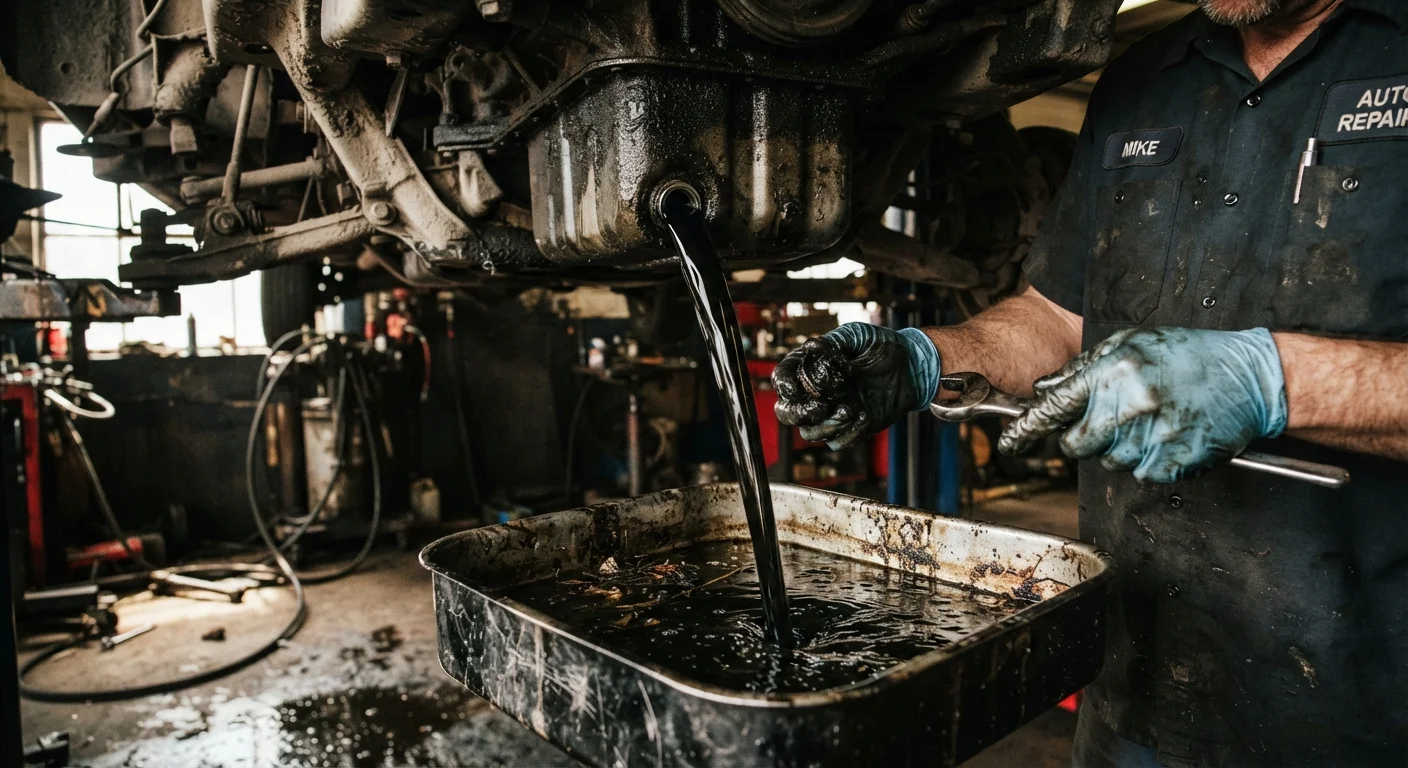
What Engine Oil Actually Does — and What Happens When It Breaks Down
Motor oil performs several simultaneous jobs: it lubricates metal surfaces moving at high speed, carries heat away from the combustion zone, suspends contaminants so they can be trapped by the filter, and protects against corrosion. Fresh oil handles all of this efficiently. As miles accumulate, however, heat and friction degrade the oil's base molecules and additives. The result is oil that's thicker, more acidic, and far less effective at the tasks it was engineered to perform.
Once degraded oil loses its protective film strength, metal components — pistons, camshafts, crankshaft bearings — begin contacting each other with increasing friction. This wear is cumulative and largely invisible until a serious problem surfaces. Understanding this process is the first step toward appreciating why a routine oil change, costing relatively little, prevents far more expensive consequences down the road. For a deeper look at how different oil formulations hold up over time, see our guide to synthetic vs. conventional motor oil.
Common Mistakes Drivers Make With Oil Changes
Most oil-change neglect isn't intentional — it grows from misconceptions, habit, or simply forgetting. The mistakes below are the most consequential ones, and each is more avoidable than it might seem.
Relying on the old "every 3,000 miles" rule regardless of the vehicle or oil type.
Why it happens: This interval was appropriate for older engines and conventional oil, and it has persisted in popular culture long after engineering moved on.
Waiting until the oil pressure warning light appears before addressing overdue oil changes.
Why it happens: Dashboard warning lights feel like the natural signal for action, but the oil pressure warning indicates a serious, often already-damaging problem — not a reminder to schedule service.
Topping off with oil instead of performing a full oil and filter change.
Why it happens: Adding fresh oil to a low reservoir seems logical and is faster than a full service, but it dilutes degraded oil rather than replacing it.
Skipping oil changes during low-mileage periods, assuming the oil is still good because the car wasn't driven much.
Why it happens: Mileage feels like the most intuitive measure of engine use, so low odometer accumulation seems to mean low wear.
$4,000–$8,000+
Typical engine sludge repair or replacement cost
Industry estimates from automotive repair data suggest partial or full engine work from sludge damage can cost several thousand dollars, vastly exceeding the price of years of routine oil changes.
5,000–10,000 mi
Modern recommended oil-change interval range
Many current manufacturer owner's manuals specify intervals between 5,000 and 10,000 miles, with some full-synthetic applications reaching up to 15,000 miles under ideal conditions.
The Real Price of Deferred Maintenance
The financial case for staying current on oil changes becomes stark when you compare costs directly. A routine oil change is a predictable, manageable expense. By contrast, sludge-related engine damage can require partial or full engine replacement — a repair that can dwarf the value of an older vehicle entirely.
Warranty Coverage Can Be Voided
Most new-vehicle limited warranties require that owners follow the manufacturer's maintenance schedule, including oil changes at specified intervals. Failing to do so — and failing to document it — can give a manufacturer grounds to deny a powertrain warranty claim. If an engine failure is traced to oil neglect, the repair cost falls entirely on the owner, regardless of the vehicle's age or mileage.
Deferred maintenance also affects resale value. Prospective buyers and dealers scrutinize service records, and gaps in oil-change history signal elevated risk. A vehicle with incomplete maintenance documentation often sells for less, or requires a price reduction to compensate the buyer for unknown repair risk. The true cost of skipping routine upkeep extends well beyond the repair bill itself.
For drivers who want to understand all the recurring costs involved in vehicle ownership, our article on hidden ownership costs puts maintenance expenses in useful perspective. And if you're thinking about the long view, the maintenance habits that extend a vehicle's life are worth building early.
Low Oil Level Is Not the Same as Old Oil
A dipstick reading in the acceptable range tells you the quantity of oil present — not its condition. Oil can be at the correct level and still be so degraded that it offers minimal protection. Always track both the level and the service interval independently; one check does not substitute for the other.
The content on this site is for informational purposes only and is not a substitute for professional advice. Always consult a qualified professional for guidance specific to your situation.