

Why Most Houseplants Fail (And It's Not About Watering)
Walk into almost any garden center and you'll find labels that say "easy care" on plants that die within weeks of reaching someone's home. The culprit is rarely neglect — it's placement. A pothos that would cascade beautifully on a bathroom shelf might languish on a north-facing windowsill in a darker apartment. Understanding your home's actual light conditions before you buy a single plant is the most important step most people skip.
Light in homes is more variable than it appears. A room described as "bright" may only receive direct sun for two hours at midmorning. South- and west-facing windows generally deliver the most consistent light; north-facing rooms receive the least. East-facing windows offer gentle morning light that suits a surprising number of plants. Before choosing, observe your rooms at different times of day and note where sunlight actually lands on the floor — not just which windows face which direction.
For more on how spatial choices shape your daily experience, see how your environment influences your habits.
Matching Plants to Your Actual Light Conditions
Once you've mapped your light, choosing plants becomes much more straightforward. The following groupings give you reliable options by condition.
Choose bright-indirect-light plants for rooms with south- or west-facing windows
These windows provide more total light hours but direct afternoon sun can scorch many popular houseplants. Bright indirect light — where sunlight is present but not hitting the leaves directly — suits the widest range of attractive species. Getting this match right dramatically extends a plant's lifespan.
Select genuinely low-light species for north-facing or interior rooms
Low-light doesn't mean no-light, but it does require plants adapted to forest understory conditions. Trying to keep high-light plants in dim spots results in etiolation — stretched, pale growth — and eventual decline. Choosing the right species from the start avoids this entirely.
Use east-facing windowsills for humidity-loving or delicate varieties
East windows offer gentle morning sun without the intensity of afternoon light, making them ideal for plants sensitive to heat stress. This soft light also protects patterned or variegated leaves that can bleach in strong direct sun.
Match pot drainage to your watering habits, not the plant's theoretical needs
Overwatering — usually caused by pots without drainage holes retaining too much moisture — is the leading cause of root rot. Even drought-tolerant plants can rot in a sealed container. Being honest about how frequently you'll water helps you choose the right pot setup before problems start.
Elevate trailing plants to let their form read clearly
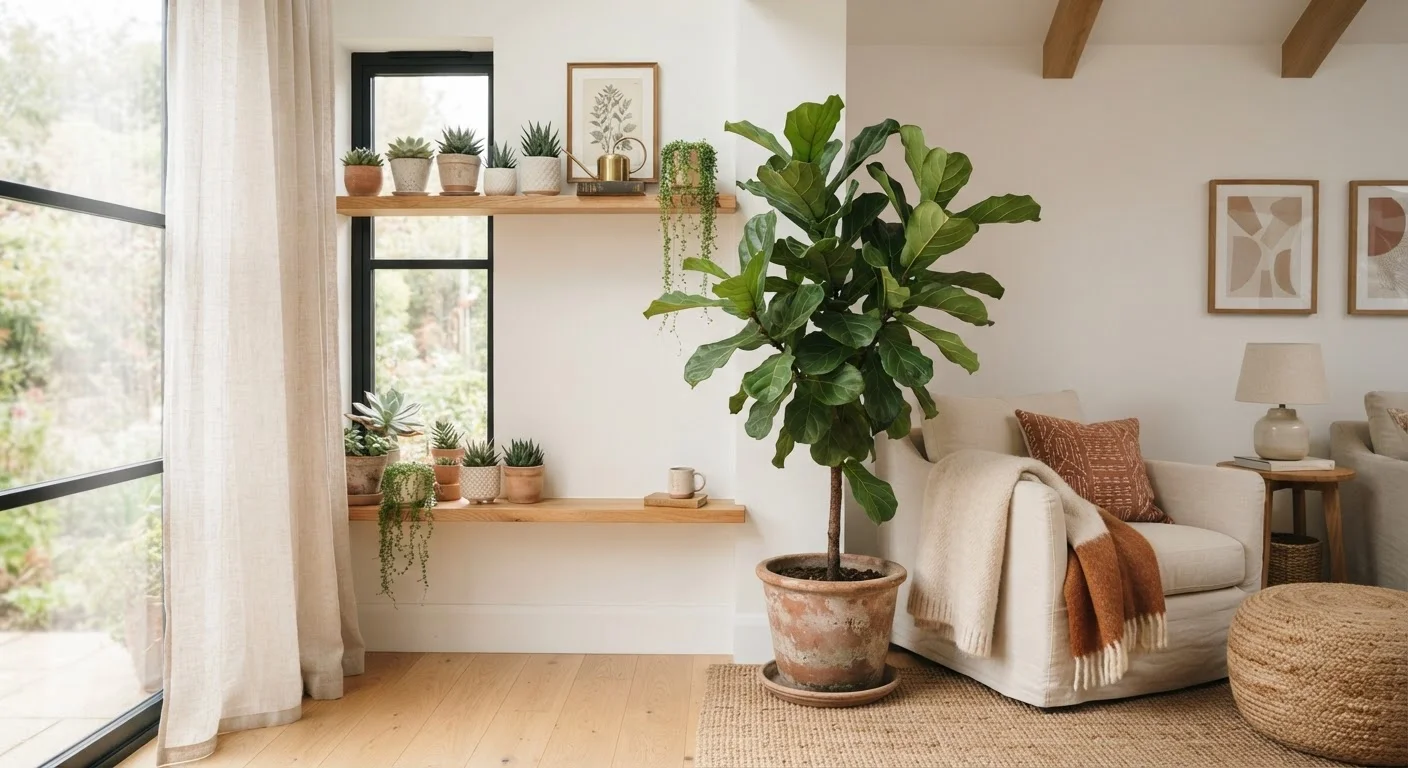
Trailing varieties like pothos, string of pearls, or heartleaf philodendron look flat and unimpressive when placed on the floor. Elevation — on a shelf, plant stand, or hanging planter — lets cascading growth create vertical movement and soften architectural edges.
Plants work best when they complement the rest of your décor system. If your room already uses natural materials and layered textures, a structural plant like a snake plant or a fiddle-leaf fig can anchor that look without competing with it. See our guide on using texture to bring a flat room to life for ideas on building that layered look.
Placement Principles That Make Plants Look Intentional
Beyond light, where you physically position plants determines whether they look designed or simply dumped. A few spatial principles help.
Grouping three or more plants of varying heights creates a cluster that reads as a deliberate design choice rather than an afterthought. Odd numbers tend to look more natural. Use plants to guide the eye: a tall floor plant in a corner draws attention upward and makes ceilings feel higher — a principle equally useful in small spaces where layout matters most.
Pot choice matters too. A terracotta pot suits warm, earthy palettes; a white ceramic works in minimalist or Scandinavian-influenced rooms. If you're balancing a home refresh budget, plants and pots fall squarely in the "high visual return for lower cost" category — a useful frame explored in our piece on what deserves your budget in a living room refresh.
~5%
Minimum light transmittance through tinted glass
Standard window glass blocks a portion of UV and some visible spectrum light, meaning indoor light levels are always lower than they appear — a key reason plants suited to 'full sun' outdoors rarely thrive inside.
60–70%
Houseplant deaths attributed to overwatering
Horticultural educators commonly cite overwatering as the leading cause of indoor plant loss, far outpacing underwatering or pest damage in typical home conditions.
Room-by-Room Guidance for Indoor Plants
Different rooms present different conditions, and the best plant for each depends on more than style preference.
Living room: Usually the most light-flexible room. Use larger statement plants — monsteras, rubber trees, birds of paradise — near windows to anchor seating arrangements. Trailing plants like pothos or heartleaf philodendron work well on shelves or high ledges.
Bedroom: Choose low-maintenance plants that tolerate lower light and temperature swings. Snake plants and ZZ plants are reliable choices. Avoid plants that require high humidity or daily attention — the goal is calm, not complexity.
Kitchen: Herbs are an obvious choice near a sunny window, but many kitchens have limited counter space. Hang small trailing varieties or use a narrow vertical planter on a windowsill. Be realistic about steam and grease: choose easy-clean containers.
Bathroom: Often humid and lower in light — exactly what ferns, peace lilies, and air plants prefer. A lush fern on a pedestal next to a shower can transform a utilitarian space. Renters should check that any hanging installation is permitted; most freestanding plant stands require no modification at all. For more renter-friendly ideas, explore the renting hub.
A Note for Renters on Plant Installations
Most freestanding plant stands, floor planters, and shelf displays require no wall modifications and are fully renter-friendly. Ceiling hooks for hanging planters may require landlord permission or may cause damage that affects your security deposit. Always check your lease before drilling or mounting anything overhead. Freestanding ladder shelves or tension rod plant displays are practical alternatives that leave no trace.
For rooms that feel generic despite good furniture, plants add one element that no purchased piece can replicate: organic shape and life. That distinction is explored further in common decorating myths worth questioning.
“The question to ask isn't 'do I like this plant?' — it's 'does my home have what this plant needs?' Start there and most of the guesswork disappears.”
— Christopher Griffin, Horticulturist and indoor plant educator known as Plant Kween
The content on this site is for informational purposes only and is not a substitute for professional advice. Always consult a qualified professional for guidance specific to your situation.